
A Tiger in the Zoo Explanation in Hindi
A Tiger in the Zoo Explanation in Hindi & English के माध्यम से आप Class 10 First Flight की इस महत्वपूर्ण poem को आसानी से समझ सकते हैं। यह कविता एक tiger के natural life और zoo में उसकी captivity के बीच के contrast को दर्शाती है। इस post में आपको इस poem की Hindi और English दोनों में explanation, साथ ही summary, theme, stanza-wise explanation और important questions answers मिलेंगे। यह content विशेष रूप से Hindi medium students के लिए तैयार किया गया है, ताकि वे इस poem को अच्छे से समझकर अपने exam preparation को मजबूत बना सकें।
ONLINE TEST
अपनी तैयारी को परखें
Related Poems:
Dust of Snow Explanation in Hindi
Fire and Ice Explanation in Hindi
Table of Contents
A Tiger in the Zoo Summary
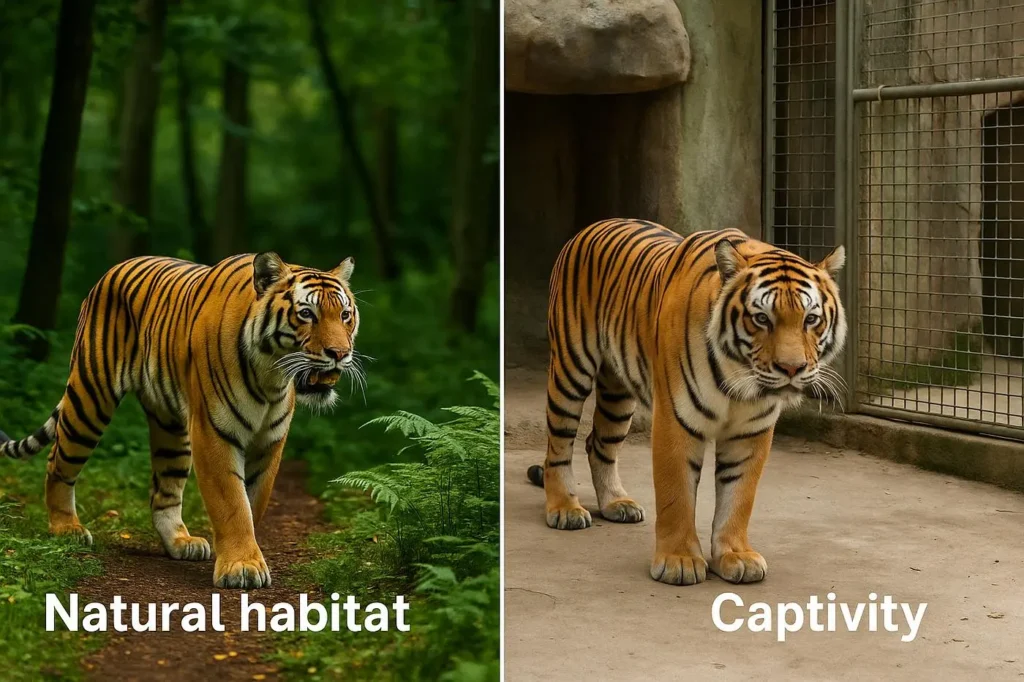
- The poem A Tiger in the Zoo by Leslie Norris highlights the contrast between a tiger’s natural life in the jungle and his restricted life in a zoo. In the cage, the tiger is helpless, angry, and frustrated as he walks only a few steps again and again. He cannot express his power and freedom.
- The poet imagines how the tiger should be in the forest—hiding in the shadows, moving silently through grass, and hunting deer. In reality, the tiger is locked in a concrete cell, ignoring visitors. At night, he looks at the stars, which symbolize freedom. The poem conveys the importance of freedom and criticizes the captivity of wild animals.
A Tiger in the Zoo Theme
- The central theme of the poem is the contrast between freedom and captivity. The poet shows that a tiger, which is naturally powerful and free in the jungle, becomes helpless, frustrated, and angry when kept in a cage. The poem highlights the suffering, loneliness, and suppressed anger of the tiger. It also conveys that wild animals belong to their natural habitat, not in artificial environments. Overall, the poem gives a strong message about the importance of freedom and respect for wildlife.
- इस कविता का मुख्य विषय स्वतंत्रता और कैद के बीच का अंतर है। कवि दिखाता है कि जो बाघ जंगल में स्वाभाविक रूप से शक्तिशाली और स्वतंत्र होता है, वही पिंजरे में कैद होकर असहाय, निराश और क्रोधित हो जाता है। कविता में बाघ के दुख, अकेलेपन और दबे हुए क्रोध को दर्शाया गया है। यह भी संदेश दिया गया है कि जंगली जानवरों का स्थान उनका प्राकृतिक आवास है, न कि मनुष्यों द्वारा बनाए गए कृत्रिम स्थान। अंततः यह कविता स्वतंत्रता के महत्व और वन्यजीवों के प्रति सम्मान का संदेश देती है।
A Tiger in the zoo Free PDF
- इस poem की PDF प्राप्त करने के लिए आप हमें अपने email से info@niyans.com पर mail करें। हम आपको जल्दी ही इस poem की complete PDF भेज देंगे, जिससे आप अपनी तैयारी और भी बेहतर बना सकें।
A Tiger In The Zoo Explanation Stanza-wise in Hindi and English
Stanza-1
He stalks in his vivid stripes
The few steps of his cage,
On pads of velvet quiet,
In his quiet rage.
1.Difficult words meaning
| Word | Meaning in English | Hindi Meaning |
| Stalks | Walks slowly, proudly and angrily | अकड़ कर धीरे-धीरे चलना |
| Vivid | Bright, clear, deep | चटकीला, स्पष्ट |
| Pads | The soft fleshy part under the paws of an animal | पंजों के नीचे का मुलायम हिस्सा |
| Velvet | A very soft fabric | मखमल जैसा कोमल |
| Rage | Extreme anger | गुस्सा, आक्रोश |
Reference to Context
- These lines are taken from Leslie Norris’s poem “A Tiger in the Zoo”. In this poem, the poet contrasts the life of a tiger in the zoo with its life in its natural habitat – the jungle. In the jungle, the tiger is free and powerful, but in the zoo, he is locked in a small cage and feels helpless and angry. These lines describe the condition of the caged tiger.
- ये पंक्तियाँ लेस्ली नॉरिस की कविता “ए टाइगर इन द ज़ू” से ली गई हैं। इस कविता में, कवि चिड़ियाघर में एक बाघ के जीवन को उसके प्राकृतिक आवास – जंगल में उसके जीवन के साथ तुलना करता है। जंगल में बाघ स्वतंत्र और शक्तिशाली होता है, लेकिन चिड़ियाघर में वह एक छोटे से पिंजरे में बंद रहता है और असहाय और गुस्से में महसूस करता है। ये पंक्तियाँ पिंजरे में बंद बाघ की स्थिति का वर्णन करती हैं।
Explanation
- He stalks in his vivid stripes / The few steps of his cage
- The tiger with his bright striped skin walks up and down inside his very small cage. He can only take a few steps because the cage is so small. His walk shows his pride but also his helplessness.
- अपनी चमकीली धारीदार त्वचा वाला बाघ अपने बहुत छोटे पिंजरे के अंदर ऊपर-नीचे चलता रहता है। वह केवल कुछ कदम ही उठा सकता है क्योंकि पिंजरा बहुत छोटा है। उनका चलना उनके गर्व के साथ-साथ उनकी लाचारी को भी दर्शाता है।
- On pads of velvet quiet, / In his quiet rage.
- The tiger’s paws are so soft like velvet that his walk makes no sound. But inside him, there is a strong, silent anger because he has lost his freedom. He is angry but he cannot roar or show it openly, so his anger is quiet.
- बाघ के पंजे मखमल जैसे नरम हैं, इसलिए उसके चलने में कोई आवाज नहीं होती। लेकिन उसके अंदर एक शांत और गहरा गुस्सा है क्योंकि उसकी आजादी छीन ली गई है। वह गुस्से में है पर कुछ कर नहीं सकता, इसलिए उसका गुस्सा शांत है।
Critical Notes
- 1. Poetic Devices:
- Imagery: vivid stripes, pads of velvet – The poet creates a very clear visual image. We can see his bright yellow and black skin and feel the softness of his paws.
- Oxymoron / Paradox: quiet rage – This is the most important figure of speech in the stanza. Rage means extreme anger which is usually loud, but here it is quiet. It shows his anger is controlled, helpless and deep inside. He cannot roar.
- Alliteration: vivid… velvet – soft ‘v’ sound shows softness of paws and beauty.
- Metaphor: pads of velvet – Paws are compared to velvet without using ‘like’. It shows his walk is completely silent.
- 2. Symbolism:
- Vivid stripes = His natural beauty, identity and power.
- Few steps = Restricted life, loss of freedom. A tiger who should run miles can only take a few steps.
- Pads of velvet quiet = Natural hunter’s quality, now useless in a cage.
- Quiet rage = Silent protest against human beings.
- 3. Tone and Mood:
- The tone is sad, sympathetic and serious.
- 4. Central Idea of this Stanza:
- This stanza is the summary of the whole poem. It tells us that outwardly the tiger looks calm and quiet because he walks silently, but inwardly he is full of anger and frustration because his freedom is snatched.
Stanza-2
He should be lurking in shadow,
Sliding through long grass
Near the water hole
Where plump deer pass.
Difficult Words Meaning
| Word | Meaning in English | Hindi Meaning |
| Lurking | Hiding and waiting secretly to attack | घात लगाकर छिपना |
| Shadow | Dark place under trees | छाया, अंधेरा |
| Sliding | Moving smoothly and quietly | धीरे से सरकना / फिसलना |
| Water hole | A small pond in the forest where animals drink water | जंगल का वह तालाब जहाँ जानवर पानी पीते हैं |
| Plump | Fat and healthy | मोटा-ताजा, हष्ट-पुष्ट |
| Pass | To go by | गुजरना |
Reference to context
- This stanza is from Leslie Norris’s poem “A Tiger in the Zoo”. In the first stanza, the poet showed the tiger locked in a cage. In this stanza, the poet imagines what the tiger should actually be doing if he were free in his natural home – the jungle.
- यह पद लेसली नॉरिस की कविता “A Tiger in the Zoo” से है। पहले पद में पिंजरे के बाघ की बेबसी दिखाने के बाद, कवि इस पद में बताता है कि अगर बाघ जंगल में आजाद होता तो उसका जीवन कैसा होता।
Explanation
- He should be lurking in shadow, / Sliding through long grass
- The poet says that the tiger should not be in a cage. He belongs in the forest, hiding in the shadows of trees and moving silently through the tall grass. This is his natural way of hunting.
- कवि कहता है कि बाघ को पिंजरे में नहीं होना चाहिए। उसे तो जंगल में पेड़ों की छाया में छिपकर और लंबी घास में चुपके से चलते हुए शिकार की तलाश में होना चाहिए। यही उसका प्राकृतिक तरीका है।
- Near the water hole / Where plump deer pass.
- The tiger should be waiting near the water hole, where healthy, fat deer come to drink water. There he can hunt for his food. This shows his real identity as a powerful and fearless hunter.
- उसे तो जंगल के उस तालाब के पास होना चाहिए जहाँ मोटे-ताजे हिरण पानी पीने आते हैं। वहाँ वह अपने शिकार का इंतजार करे। यह उसकी असली पहचान है – एक शक्तिशाली और निडर शिकारी।
Critical Notes
1. Poetic Devices:
Imagery:
The poet creates a very strong visual picture of the jungle – lurking in shadow, sliding through long grass, water hole, plump deer. You can almost see the tiger hunting.
Alliteration: Repetition of consonant sounds – ‘p’ in plump deer pass.
2. Contrast:
The poet makes a sharp contrast between Stanza 1 and Stanza 2.
Stanza 1 = Artificial, noisy zoo, small cage, quiet rage
Stanza 2 = Natural, silent jungle, open space, powerful hunter
This contrast makes us feel pity for the caged tiger.
The tone is sympathetic and serious. The poet is not just describing a tiger; he is giving a message that animals have a right to freedom. Humans should not keep them locked for entertainment. It is an attack on human cruelty.
3. Tone and Message
The tone is sad, sympathetic and serious.
4. Central Idea of this Stanza:
This stanza is the summary of the whole poem. It tells us that outwardly the tiger looks calm and quiet because he walks silently, but inwardly he is full of anger and frustration because his freedom is snatched.
Stanza-3
He should be snarling around houses
At the jungle’s edge,
Baring his white fangs, his claws,
Terrorising the village!
Difficult Words Meaning
| Word | Meaning in English | Hindi Meaning |
| Snarling | Making an angry, low sound showing teeth | गुर्राना |
| Jungle’s edge | The border where jungle ends and village begins | जंगल का किनारा |
| Baring | Showing / uncovering | दिखाना, बाहर निकालना |
| Fangs | Long sharp teeth of an animal | नुकीले दाँत |
| Claws | Sharp nails of tiger | पंजे / नाखून |
| Terrorising | Creating extreme fear in people | डराना, आतंक फैलाना |
Reference to Context
- This stanza is from Leslie Norris’s poem “A Tiger in the Zoo”. After showing the tiger caged in the zoo (stanza 1) and imagining him hunting deer in the jungle (stanza 2), the poet now imagines the tiger as a powerful and dangerous animal who creates fear in humans living near the jungle.
- यह पद लेसली नॉरिस की कविता “A Tiger in the Zoo” से लिया गया है। इसमें कवि बाघ के एक और प्राकृतिक रूप का वर्णन करता है – गाँव वालों को डराने वाला शक्तिशाली बाघ।
Explanation
- He should be snarling around houses / At the jungle’s edge,
- The poet says the tiger should be near the houses which are at the border of the jungle. He should be growling and roaming around there, showing his power. This is his natural behaviour.
- कवि कहता है कि बाघ को जंगल के किनारे बसे घरों के आस-पास गुर्राते हुए घूमना चाहिए। यही उसका स्वाभाविक व्यवहार है।
- Baring his white fangs, his claws, / Terrorising the village!
- While roaming, he should be showing his sharp white teeth and claws and frightening the people of the village. This shows that the tiger is not cruel, but it is his nature to create terror to protect his territory.
- घूमते हुए उसे अपने सफेद नुकीले दाँत और पंजे दिखाकर गाँव में डर फैलाना चाहिए। यह क्रूरता नहीं, बल्कि अपने इलाके की रक्षा के लिए उसका प्राकृतिक स्वभाव है।
Critical Notes
- 1. Irony:
There is a deep irony. The tiger who should be terrorising the village is himself terrorised and locked by humans in a small cage. The hunter has become the hunted. - 2. Tone:
The tone is powerful and a little fearful. The poet respects the natural power of the tiger.
Stanza-4
But he’s locked in a concrete cell,
His strength behind bars,
Stalking the length of his cage,
Ignoring visitors.
Difficult words meaning
| Word | Meaning in English | Hindi Meaning |
| Locked | Closed in a prison, not allowed to go out | बंद, कैद |
| Concrete cell | A small room made of cement, not of natural jungle | सीमेंट से बनी छोटी कोठरी / पिंजरा |
| Strength | Power | ताकत, शक्ति |
| Behind bars | Inside the iron rods of cage | सलाखों के पीछे |
| Stalking | Walking slowly with anger and pride | गुस्से और अकड़ के साथ चलना |
| Ignoring | Not paying any attention | अनदेखा करना, ध्यान न देना |
| Visitors | People who come to see in the zoo | दर्शक, देखने आने वाले लोग |
Reference to Context
- This stanza is from Leslie Norris’s poem “A Tiger in the Zoo”. After imagining the free and powerful tiger in the jungle in stanza 2 and 3, the poet again comes back to reality in this stanza. He shows the present miserable condition of the tiger in the zoo.
- यह पद लेसली नॉरिस की कविता “A Tiger in the Zoo” से है। जंगल के आजाद बाघ की कल्पना करने के बाद कवि फिर से हकीकत में लौटता है और चिड़ियाघर के बाघ की दयनीय स्थिति दिखाता है।
Explanation
- But he’s locked in a concrete cell, / His strength behind bars,
- The poet says that in reality, the powerful tiger is locked in a small, hard cement cell. All his great strength is useless because it is locked behind the iron bars. He cannot use his power.
कवि कहता है कि हकीकत में वह शक्तिशाली बाघ सीमेंट की बनी एक छोटी सी कोठरी में बंद है। उसकी सारी ताकत सलाखों के पीछे बेकार पड़ी है। वह अपनी शक्ति का इस्तेमाल नहीं कर सकता। - Stalking the length of his cage, / Ignoring visitors.
- The tiger walks up and down only the length of his cage. He does not look at the people who come to see him. He ignores them because he is not interested in entertaining humans and he hates his captivity.
वह बाघ अपने पिंजरे की लंबाई में ही इधर-उधर घूमता रहता है। वह उसे देखने आए लोगों की तरफ देखता भी नहीं। वह उन्हें अनदेखा करता है क्योंकि वह इंसानों का मनोरंजन नहीं करना चाहता और अपनी कैद से नफरत करता है।
Critical notes
- 1. Strong Contrast – The word “But”:
This stanza starts with “But”. This single word breaks the beautiful dream of the jungle (Stanza 2 & 3) and brings us back to the sad reality of the zoo. It is a very powerful turning point. - 2. Poetic Devices:
- Alliteration: behind bars – repetition of ‘b’ sound emphasizes that his strength is trapped.
Imagery: concrete cell, behind bars – creates a hard, cold, unnatural and cruel image opposite to the soft long grass and shadow of the jungle.
Irony: The strongest animal of the jungle is the weakest prisoner in the zoo. His strength has no value now. - 3. Symbolism:Concrete cell symbolizes human cruelty and artificial world.
Ignoring visitors symbolizes the tiger’s self-respect, pride and silent protest against humans. - 4. Message:
The poet gives a clear message that keeping wild animals in zoos is unjust. A zoo can never be a jungle. We may lock their body but we cannot win their spirit.
Stanza-5
He hears the last voice at night,
The patrolling cars,
And stares with his brilliant eyes
At the brilliant stars.
Difficult Words Meaning
| Word | Meaning in English | Hindi Meaning |
| Patrolling cars | Police / zoo guard cars moving at night for security | रात में पहरा देने वाली गाड़ियाँ |
| Stares | Looks for a long time | देर तक टकटकी लगाकर देखना |
| Brilliant | Very bright, shining | चमकदार |
Reference to context
This is the last stanza from Leslie Norris’s poem “A Tiger in the Zoo”. After describing the tiger’s helpless day life in the cage, the poet describes his lonely and hopeless night.
Explanation
He hears the last voice at night, / The patrolling cars,
Explanation:
- At night, the zoo becomes silent. The last voice of humans disappears and only the sound of patrolling police cars is heard. It shows his loneliness at night.
- रात में चिड़ियाघर में सन्नाटा हो जाता है। इंसानों की आखिरी आवाज भी खत्म हो जाती है और सिर्फ पहरा देने वाली गाड़ियों की आवाज सुनाई देती है। यह उसकी रात की अकेलेपन को दिखाता है।
And stares with his brilliant eyes / At the brilliant stars.
Explanation:
- The tiger with his bright eyes looks at the bright stars in the sky. The stars remind him of his freedom because stars are free in the sky, but he is not. He is still in the cage. His dream of freedom will never come true.
- वह बाघ अपनी चमकदार आँखों से आकाश के चमकते तारों को देखता रहता है। तारे आकाश में आजाद हैं, पर वह आजाद नहीं है। वह अब भी पिंजरे में है। उसकी आजादी का सपना कभी पूरा नहीं होगा।
Critical Notes
- Theme of Loneliness: Day has visitors, night is fully silent – only patrolling cars. Shows complete isolation.
- Symbolism:
- Patrolling cars = Human power, constant watch, no escape
- Brilliant stars = Freedom, hope, vast jungle sky which is free but he is not
- Irony: Both tiger’s eyes and stars are brilliant – but stars are free, tiger’s brilliance is caged.
- Hopeless Ending: He only stares at stars, cannot reach them. His dream of freedom will never come true. Shows sad, helpless ending of poem.
A Tiger in the Zoo Extract-Based Questions
Extract-1
He stalks in his vivid stripes
The few steps of his cage,
On pads of velvet quiet,
In his quiet rage.
Questions:
(i) Where is the tiger?
Ans:
The tiger is in a cage in the zoo.
: बाघ चिड़ियाघर के पिंजरे में है।
(ii) What does “vivid stripes” mean?
Ans:
It means bright and clear stripes on the tiger’s body
.: इसका अर्थ है बाघ के शरीर की चमकीली और स्पष्ट धारियाँ।
(iii) Why is the tiger in “quiet rage”?
Ans:
Because he is angry due to being imprisoned but cannot express it.
: क्योंकि वह कैद होने के कारण गुस्से में है, लेकिन उसे व्यक्त नहीं कर सकता।
(iv) Find a word that means ‘very soft’.
Ans: Velvet: मखमल
Extract-2
He should be lurking in shadow,
Sliding through long grass
Near the water hole
Where plump deer pass.
Questions:
(i) Where should the tiger be?
Ans:
He should be in the forest.
: उसे जंगल में होना चाहिए।
(ii) What is the tiger waiting for?
Ans:
He is waiting for his prey (deer).
: वह अपने शिकार (हिरण) का इंतजार कर रहा है।
(iii) What does “lurking” mean?
Ans:
Hiding and waiting to attack.
: छिपकर घात लगाना।
(iv) Why are deer called “plump”?
Ans:
Because they are healthy and well-fed.
: क्योंकि वे स्वस्थ और मोटे-ताजे हैं।
Extract-3
He should be snarling around houses
At the jungle’s edge,
Baring his white fangs, his claws,
Terrorising the village!
Questions:
(i) Where is the tiger now?
Ans:
He is imagined near the jungle’s edge.
: उसे जंगल के किनारे कल्पना किया गया है।
(ii) What does “snarling” mean?
Ans:
Growling angrily.: गुर्राना।
(iii) How does the tiger create fear?
Ans:
By showing his sharp teeth and claws.
: अपने नुकीले दाँत और पंजे दिखाकर।
(iv) What is the tone of this stanza?
Ans:
Fierce and powerful.
: भयंकर और शक्तिशाली।
Extract-4
But he’s locked in a concrete cell,
His strength behind bars,
Stalking the length of his cage,
Ignoring visitors.
Questions:
(i) What does “concrete cell” mean?
Ans: A strong cement cage.
: सीमेंट का बना पिंजरा।
(ii) Why is his strength useless?
Ans:
Because he is trapped behind bars.
: क्योंकि वह सलाखों के पीछे कैद है।
(iii) What is the tiger doing?
Ans:
Walking back and forth in the cage.
: पिंजरे में आगे-पीछे चल रहा है।
(iv) Why does he ignore visitors?
Ans:
Because he is unhappy and frustrated.
: क्योंकि वह दुखी और निराश है।
Extract-5
He hears the last voice at night,
The patrolling cars,
And stares with his brilliant
eyesAt the brilliant stars.
Questions:
(i) What does the tiger hear at night?
Ans: The sound of patrolling cars.
: गश्त करने वाली गाड़ियों की आवाज।
(ii) What is he looking at?
Ans: The stars in the sky.
: आसमान के तारे।
(iii) What do the stars symbolize?
Ans: Freedom and the open world.
: स्वतंत्रता और खुली दुनिया।
(iv) What is the mood of this stanza?
Ans: Sad and lonely.
: दुखद और अकेला।
Short Answer Type Questions (A Tiger in the Zoo)
1. Why is the tiger in the cage angry?
Ans:
The tiger is angry because he is imprisoned and cannot live freely.बाघ गुस्से में है क्योंकि वह कैद है और स्वतंत्र रूप से नहीं रह सकता।
2. How does the tiger move in the cage?
Ans:
He moves slowly and quietly, taking a few steps again and again.वह धीरे-धीरे और चुपचाप चलता है, बार-बार कुछ कदम ही चलता है।
3. What should the tiger be doing in the forest?
Ans:
He should be hunting deer and moving freely in the jungle.उसे जंगल में स्वतंत्र घूमते हुए हिरण का शिकार करना चाहिए।
4. What does the poet mean by “quiet rage”?
Ans:
It means the tiger is silent but full of anger inside.इसका अर्थ है कि बाघ बाहर से शांत है लेकिन अंदर से गुस्से से भरा है।
5. Why does the tiger ignore visitors?
Ans:
He ignores visitors because he is unhappy and frustrated.वह दर्शकों को नजरअंदाज करता है क्योंकि वह दुखी और निराश है।
6. What does the tiger do at night?
Ans:
He listens to sounds and looks at the stars.वह आवाजें सुनता है और तारों को देखता है।
7. What do the stars symbolize?
Ans:
The stars symbolize freedom and the open world.तारे स्वतंत्रता और खुली दुनिया का प्रतीक हैं।
8. How is the tiger’s life in the zoo different from the forest?
Ans:
In the zoo, he is confined and helpless, while in the forest he is free and powerful.चिड़ियाघर में वह कैद और असहाय है, जबकि जंगल में वह स्वतंत्र और शक्तिशाली है।
9. Why does the poet feel sympathy for the tiger?
Ans:
Because the tiger is deprived of his natural life and freedom.
क्योंकि बाघ अपनी प्राकृतिक जिंदगी और स्वतंत्रता से वंचित है।
10. What message does the poem convey?
Ans:
The poem conveys the importance of freedom and natural habitat for animals.यह कविता जानवरों के लिए स्वतंत्रता और प्राकृतिक आवास के महत्व को दर्शाती है।
Important Questions from the poem “A Tiger in the Zoo”
Very Important Short Questions
1. Why does the tiger walk only a few steps in the cage?
Ans:
Because the cage is small and restricts his movement.क्योंकि पिंजरा छोटा है और उसकी गतिविधि सीमित है।
2. What is meant by “quiet rage”?
Ans:
The tiger is silent but full of anger inside.बाघ बाहर से शांत है लेकिन अंदर से गुस्से से भरा है।
3. Where should the tiger be instead of the cage?
Ans:
In the forest, living freely in his natural habitat.जंगल में, अपने प्राकृतिक आवास में स्वतंत्र रूप से।
4. How does the tiger behave in the jungle?
Ans:
He hunts animals and moves freely with power.वह शिकार करता है और स्वतंत्र रूप से घूमता है।
5. Why does the tiger ignore visitors?
Ans:
Because he is unhappy and not interested in them.क्योंकि वह दुखी है और उनमें रुचि नहीं रखता।
6. What does the tiger do at night?
Ans:
He listens to sounds and looks at the stars.वह आवाजें सुनता है और तारों को देखता है।
7. What do “brilliant stars” symbolize?
Ans:
Freedom and the open world.स्वतंत्रता और खुली दुनिया।
8. Contrast the life of the tiger in the zoo and in the forest.
Ans:
In the zoo, the tiger is confined, helpless, and frustrated. In the forest, he is free, powerful, and active.
चिड़ियाघर में बाघ कैद, असहाय और निराश है, जबकि जंगल में वह स्वतंत्र, शक्तिशाली और सक्रिय है।
9. How does the poet create sympathy for the tiger?
Ans:
By showing his helplessness, restricted movement, and loss of freedom.उसकी असहायता, सीमित जीवन और आज़ादी की कमी दिखाकर।
10. What message does the poem convey?
Ans:
Animals should live freely in their natural habitat; captivity is cruel.जानवरों को अपने प्राकृतिक आवास में स्वतंत्र रहना चाहिए; कैद क्रूर है।
Long Answer
11. Describe the central idea of the poem.
Answer:
The poem highlights the contrast between the natural life of a tiger and his miserable life in captivity. The tiger in the zoo is confined, frustrated, and powerless, while in the forest he is free, strong, and active. The poet expresses sympathy for the tiger and emphasizes the importance of freedom and natural habitat for animals.
यह कविता बाघ के प्राकृतिक जीवन और उसकी कैद की दुखद स्थिति के बीच अंतर को दर्शाती है। चिड़ियाघर में बाघ कैद, निराश और असहाय है, जबकि जंगल में वह स्वतंत्र, शक्तिशाली और सक्रिय होता है। कवि बाघ के प्रति सहानुभूति व्यक्त करता है और जानवरों के लिए स्वतंत्रता और प्राकृतिक आवास के महत्व को दर्शाता है।
12. Do you think zoos are necessary? Give your opinion.
Answer:
Zoos can help in conservation and education, but they restrict animals’ freedom. Wildlife sanctuaries are better alternatives.
चिड़ियाघर संरक्षण और शिक्षा के लिए उपयोगी हैं, लेकिन वे जानवरों की स्वतंत्रता छीन लेते हैं। वन्यजीव अभयारण्य बेहतर विकल्प हैं।