
How to Tell Wild Animals Questions & Answers
- अगर आप Class 10 English की कविता How to Tell Wild Animals के Important Questions & Answers और Extract-Based Questions की तैयारी कर रहे हैं, तो यह पोस्ट आपके लिए उपयोगी है। यहाँ आपको NCERT-based important questions, short answer questions, long answer questions और stanza-wise extract-based questions with answers सरल हिन्दी के साथ मिलेंगे। यह सामग्री Hindi Medium Students के लिए आसान और exam-oriented तरीके से तैयार की गई है, ताकि आप कविता को अच्छी तरह समझकर परीक्षा की बेहतर तैयारी कर सकें।How to Tell Wild Animals Stanza-wise Explanation
- Related Posts
1.A Tiger in the Zoo – NCERT Solutions & Stanza-wise Explanation
2.Dust of Snow – NCERT Solutions & Explanation in Hindi
3.Fire and Ice – NCERT Solutions & Stanza-wise Explanation
How to Tell Wild Animals Free PDF
इस पूरी Study Material की PDF प्राप्त करने के लिए info@niyans.com पर ईमेल करें।
Table of Contents
How to Tell Wild Animals Questions and Answers
Thinking about the poem
- Does ‘dyin’ really rhyme with ‘lion’? Can you say it in such a way that it does?
क्या ‘dyin’ की तुक वास्तव में ‘lion’ से मिलती है? क्या आप इसे इस तरह बोल सकते हैं कि इसकी तुक ‘lion’ से मिले?
Answer: No, “dyin’” does not normally rhyme perfectly with “lion.” However, the poet uses the shortened form “dyin’” and pronounces it in a way that makes it sound closer to “lion.” This playful pronunciation helps maintain the rhyme and rhythm of the poem.
नहीं, “dyin’” और “lion” में सामान्यतः पूरी तरह तुक नहीं मिलती। लेकिन कवयित्री “dying” के स्थान पर “dyin’” का प्रयोग करती हैं और इसे इस तरह उच्चारित किया जा सकता है कि यह “lion” से मिलता-जुलता सुनाई दे। इससे कविता की लय और हास्य बना रहता है।
- How does the poet suggest that you identify the lion and the tiger? When can you do so, according to him?
कवयित्री शेर और बाघ की पहचान करने का सुझाव किस प्रकार देती हैं? उनके अनुसार आप इन्हें कब पहचान सकते हैं?
Answer: The poet suggests that you can identify the Asian Lion when a large, tawny beast roars at you while you are dying. The Bengal Tiger can be identified by its black stripes on a yellow body, but you can do so only when it eats you.
कवयित्री के अनुसार Asian Lion की पहचान तब की जा सकती है जब बड़ा पीले-भूरे रंग का जानवर आपको दहाड़ते हुए मारने वाला हो। Bengal Tiger की पहचान उसके पीले शरीर पर काली धारियों से की जा सकती है, लेकिन आप उसे तब पहचान पाएँगे जब वह आपको खा चुका होगा। यही स्थिति कविता में हास्य उत्पन्न करती है।
- Do you think the words ‘lept’ and ‘lep’ in the third stanza are spelt correctly? Why does the poet spell them like this?
क्या आपको लगता है कि तीसरे stanza में ‘lept’ और ‘lep’ शब्द सही वर्तनी में लिखे गए हैं? कवयित्री ने इन शब्दों को इस प्रकार क्यों लिखा है?
Answer: No, “lept” and “lep” are not used as normal spellings in this context. The poet deliberately uses these unusual forms to create rhyme, rhythm and humour. They make the poem sound more playful and entertaining.
नहीं, “lept” और “lep” इस संदर्भ में सामान्य रूप से प्रयुक्त वर्तनी नहीं हैं। कवयित्री ने जानबूझकर इन असामान्य रूपों का प्रयोग rhyme, rhythm और humour बनाए रखने के लिए किया है। इससे कविता अधिक मनोरंजक और हास्यपूर्ण लगती है।
- Do you know what a ‘bearhug’ is? Are there similar expressions and popular ideas about wild animals in your own language(s)?
क्या आप जानते हैं कि ‘bearhug’ क्या होता है? क्या आपकी अपनी भाषा में भी जंगली जानवरों से जुड़े ऐसे ही expressions और लोकप्रिय धारणाएँ हैं?
Answer: A bearhug means a very strong and tight hug. In the poem, it humorously refers to the powerful hug of a bear while attacking a person. Similarly, “laughing hyena” and “crocodile tears” are popular expressions associated with these animals.
In Hindi, there are expressions such as “मगरमच्छ के आँसू”, meaning false tears, and “शेर की तरह बहादुर”, meaning very brave.
Bearhug का अर्थ बहुत ज़ोर से और कसकर गले लगाना है। कविता में यह भालू के शक्तिशाली आलिंगन के लिए हास्यपूर्ण ढंग से प्रयोग किया गया है। इसी प्रकार “laughing hyena” और “crocodile tears” भी इन जानवरों से जुड़े लोकप्रिय expressions हैं। हिन्दी में भी “मगरमच्छ के आँसू” और “शेर की तरह बहादुर” जैसे प्रयोग मिलते हैं।
- Look at the line “A novice might nonplus”. How would you write this ‘correctly’? Why is the poet’s ‘incorrect’ line better in the poem?
“A novice might nonplus” पंक्ति को देखिए। आप इसे सही रूप में कैसे लिखेंगे? कविता में कवयित्री की ‘गलत’ पंक्ति अधिक अच्छी क्यों है?
Answer: The line “A novice might nonplus” is grammatically unusual. It could be written more naturally as “A novice might be nonplussed.” However, the poet’s version is better because “nonplus” rhymes with “thus” and fits the rhythm of the poem. It also adds to the playful style.
“A novice might nonplus” व्याकरण की दृष्टि से असामान्य प्रयोग है। इसे सामान्य रूप से “A novice might be nonplussed” लिखा जा सकता है। लेकिन कवयित्री का प्रयोग कविता में अधिक अच्छा है क्योंकि “nonplus” की तुक “thus” से मिलती है और यह कविता की लय को बनाए रखता है। साथ ही, यह कविता के मनोरंजक अंदाज़ को बढ़ाता है।
- Can you find other examples of poets taking liberties with language, either in English or in your own language(s)? Can you find examples of humorous poems in your own language(s)?
क्या आप ऐसे अन्य उदाहरण खोज सकते हैं जहाँ कवियों ने English या अपनी भाषा में भाषा के साथ रचनात्मक स्वतंत्रता ली हो? क्या आप अपनी भाषा में हास्यपूर्ण कविताओं के उदाहरण खोज सकते हैं?
Answer: Yes. Poets often take liberties with language by changing spellings, shortening words, using unusual grammatical structures, or creating new expressions to maintain rhyme and rhythm. Humorous poetry in Hindi also uses wordplay, unusual expressions and exaggeration to create laughter.
हाँ। कवि अक्सर भाषा के साथ रचनात्मक स्वतंत्रता लेते हैं। वे rhyme और rhythm बनाए रखने के लिए शब्दों की वर्तनी बदलते हैं, शब्दों को छोटा करते हैं, असामान्य व्याकरण का प्रयोग करते हैं या नए expressions बनाते हैं। हिन्दी की हास्य कविताओं में भी शब्द-खेल, असामान्य अभिव्यक्तियों और अतिशयोक्ति का प्रयोग हास्य उत्पन्न करने के लिए किया जाता है।
- Much of the humour in the poem arises from the way language is used. Which lines do you especially like?
कविता में अधिकांश हास्य भाषा के प्रयोग के तरीके से उत्पन्न होता है। आपको कविता की कौन-सी पंक्तियाँ विशेष रूप से पसंद हैं?
Answer: I especially like the lines:
“If he roars at you as you’re dyin’,
You’ll know it is the Asian Lion.”
These lines are funny because the poet suggests that you will identify the lion only when you are about to die. The rhyme between “dyin’” and “Lion” and the exaggerated situation make these lines particularly humorous.
मुझे विशेष रूप से ये पंक्तियाँ पसंद हैं क्योंकि इनमें कवयित्री बहुत मज़ेदार ढंग से कहती हैं कि व्यक्ति शेर को तभी पहचान पाएगा जब वह मरने वाला होगा। “dyin’” और “Lion” की तुक तथा अतिशयोक्तिपूर्ण स्थिति इन पंक्तियों को विशेष रूप से हास्यपूर्ण बनाती है।
How to Tell Wild Animals – Extract-Based Questions
Stanza-1
If ever you should go by chance
To jungles in the East;
And if there should to you advance
A large and tawny beast,
If he roars at you as you’re dyin’,
You’ll know it is the Asian Lion.

- What does the poet describe as a “large and tawny beast”?
“large and tawny beast” से कवयित्री का क्या तात्पर्य है?
- a) Bengal Tiger
- b) Leopard
- c) Asian Lion
- d) Bear
Answer: c) Asian Lion
उत्तर: c) Asian Lion (एशियाई शेर)
- Where might a person encounter the animal mentioned in the stanza?
व्यक्ति इस stanza में वर्णित जानवर से कहाँ मिल सकता है?
Answer: A person might encounter it in the jungles in the East.
उत्तर: व्यक्ति इस जानवर से पूर्व के जंगलों में मिल सकता है।
- What does the word “tawny” mean?
“tawny” शब्द का क्या अर्थ है?
Answer: Tawny means yellowish-brown in colour.
उत्तर: Tawny का अर्थ पीले-भूरे रंग का होता है।
- How can one identify the Asian Lion?
एशियाई शेर की पहचान कैसे की जा सकती है?
Answer: One can identify the Asian Lion when a large tawny beast roars at you while you are dying.
उत्तर: जब कोई बड़ा पीले-भूरे रंग का जानवर मरते समय आप पर दहाड़े, तब उसकी पहचान Asian Lion के रूप में की जा सकती है।
- What makes the description of the Asian Lion humorous?
Asian Lion का वर्णन हास्यपूर्ण क्यों है?
Answer: It is humorous because the person identifies the lion only when he is about to die.
उत्तर: यह हास्यपूर्ण है क्योंकि व्यक्ति शेर की पहचान तभी करता है जब वह मरने वाला होता है।
Stanza-2
Or if sometime when roaming round,
A noble wild beast greets you,
With black stripes on a yellow ground,
Just notice if he eats you.
This simple rule may help you learn
The Bengal Tiger to discern.

- What helps identify the animal described in the stanza?
इस stanza में वर्णित जानवर की पहचान किससे होती है?
- a) Its loud roar
- b) Its black stripes on a yellow body
- c) Its spots
- d) Its tight hug
Answer: b) Its black stripes on a yellow body
उत्तर: b) पीले शरीर पर काली धारियाँ
- What kind of animal is described in the stanza?
इस stanza में किस प्रकार के जानवर का वर्णन किया गया है?
Answer: A noble wild beast with black stripes on a yellow body is described.
उत्तर: इसमें पीले शरीर पर काली धारियों वाले एक भव्य जंगली जानवर का वर्णन किया गया है।
- What does “roaming round” mean?
“roaming round” का क्या अर्थ है?
Answer: “Roaming round” means moving or wandering around.
उत्तर: “Roaming round” का अर्थ इधर-उधर घूमना है।
- How can one identify the Bengal Tiger according to the poet?
कवयित्री के अनुसार Bengal Tiger की पहचान कैसे की जा सकती है?
Answer: The Bengal Tiger can be identified by its black stripes on a yellow body.
उत्तर: Bengal Tiger की पहचान उसके पीले शरीर पर काली धारियों से की जा सकती है।
- What makes the description of the Bengal Tiger humorous?
Bengal Tiger का वर्णन हास्यपूर्ण क्यों है?
Answer: It is humorous because the poet says that you may identify the tiger after it eats you.
उत्तर: यह हास्यपूर्ण है क्योंकि कवयित्री कहती हैं कि व्यक्ति Tiger को उसके द्वारा खा लिए जाने के बाद पहचान पाएगा।
Stanza-3
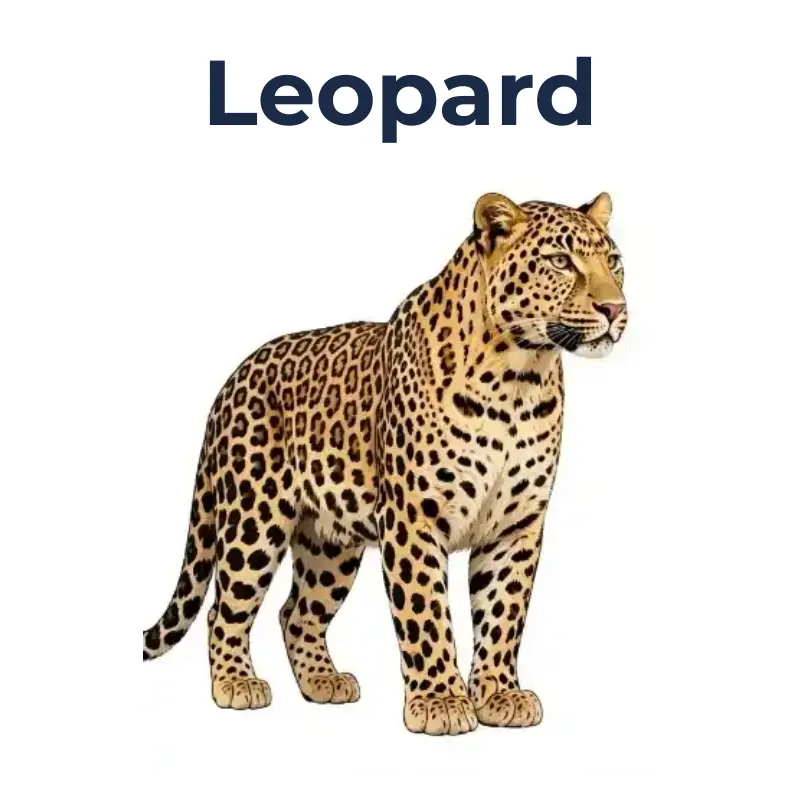
If strolling forth, a beast you view,
Whose hide with spots is peppered,
As soon as he has lept on you,
You’ll know it is the Leopard.
’Twill do no good to roar with pain,
He’ll only lep and lep again.
- What helps identify the animal described in the stanza?
इस stanza में वर्णित जानवर की पहचान किससे होती है?
- a) Black stripes
- b) Tawny colour
- c) Spots on its hide
- d) A merry smile
Answer: c) Spots on its hide
उत्तर: c) उसकी खाल पर बने धब्बों से
- What is the hide of the animal covered with?
जानवर की खाल किससे ढकी हुई है?
Answer: The animal’s hide is covered with spots.
उत्तर: जानवर की खाल धब्बों से ढकी हुई है।
- Which animal is described in the stanza?
इस stanza में किस जानवर का वर्णन किया गया है?
Answer: The Leopard is described in the stanza.
उत्तर: इस stanza में Leopard (तेंदुए) का वर्णन किया गया है।
- What happens when the Leopard leaps on the person?
जब Leopard व्यक्ति पर छलाँग लगाता है, तब क्या होता है?
Answer: The Leopard repeatedly leaps on the person. Even if the person cries out in pain, the Leopard leaps again and again.
उत्तर: Leopard व्यक्ति पर बार-बार छलाँग लगाता है। व्यक्ति दर्द से चिल्लाए, फिर भी Leopard बार-बार छलाँग लगाता रहता है।
- What makes the description of the Leopard humorous?
Leopard का वर्णन हास्यपूर्ण क्यों है?
Answer: It is humorous because the person identifies the Leopard only after it has leapt on him, and his cries of pain cannot stop it from jumping again.
उत्तर: यह हास्यपूर्ण है क्योंकि व्यक्ति Leopard की पहचान उसके द्वारा उस पर छलाँग लगाने के बाद ही करता है और दर्द से उसकी चीखें भी Leopard को दोबारा छलाँग लगाने से नहीं रोक पातीं।
Stanza-4
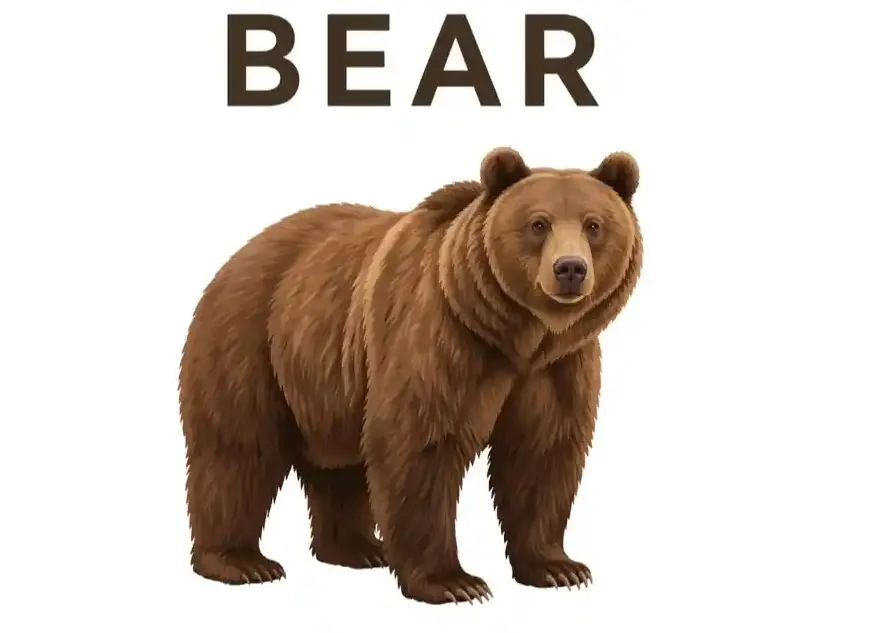
If when you’re walking round your yard
You meet a creature there,
Who hugs you very, very hard,
Be sure it is a Bear.
If you have any doubts, I guess
He’ll give you just one more caress.
- What does the creature do to the person?
वह जीव व्यक्ति के साथ क्या करता है?
- a) It roars at him.
- b) It eats him.
- c) It hugs him very tightly.
- d) It runs away.
Answer: c) It hugs him very tightly.
उत्तर: c) वह उसे बहुत कसकर गले लगाता है।
- Where does the poet imagine a person meeting the creature?
कवयित्री व्यक्ति की उस जीव से मुलाकात की कल्पना कहाँ करती हैं?
Answer: The poet imagines the person meeting the creature while walking around his yard.
उत्तर: कवयित्री व्यक्ति की उस जीव से मुलाकात की कल्पना अपने आँगन में घूमते समय करती हैं।
- How can one identify the Bear according to the poet?
कवयित्री के अनुसार Bear की पहचान कैसे की जा सकती है?
Answer: One can identify the Bear if the creature hugs him very, very hard.
उत्तर: यदि कोई जीव व्यक्ति को बहुत कसकर गले लगाए, तो उसे Bear के रूप में पहचाना जा सकता है।
- What does “caress” mean in the extract?
इस extract में “caress” का क्या अर्थ है?
Answer: Caress means a gentle, loving touch or embrace. Here, it humorously refers to the Bear’s tight hug.
उत्तर: Caress का अर्थ स्नेहपूर्ण स्पर्श या आलिंगन है। यहाँ इसका प्रयोग हास्यपूर्ण ढंग से Bear के कसकर गले लगाने के लिए किया गया है।
- What makes the description of the Bear humorous?
Bear का वर्णन हास्यपूर्ण क्यों है?
Answer: The description is humorous because the poet calls the Bear’s dangerous and powerful hug a “caress”. She also says that if you have any doubt, the Bear will hug you once more to remove it.
उत्तर: यह वर्णन हास्यपूर्ण है क्योंकि कवयित्री Bear के खतरनाक और शक्तिशाली आलिंगन को “caress” कहती हैं। वह यह भी कहती हैं कि यदि आपको कोई संदेह हो, तो Bear आपको एक बार फिर गले लगाकर आपका संदेह दूर कर देगा।
Stanza 5
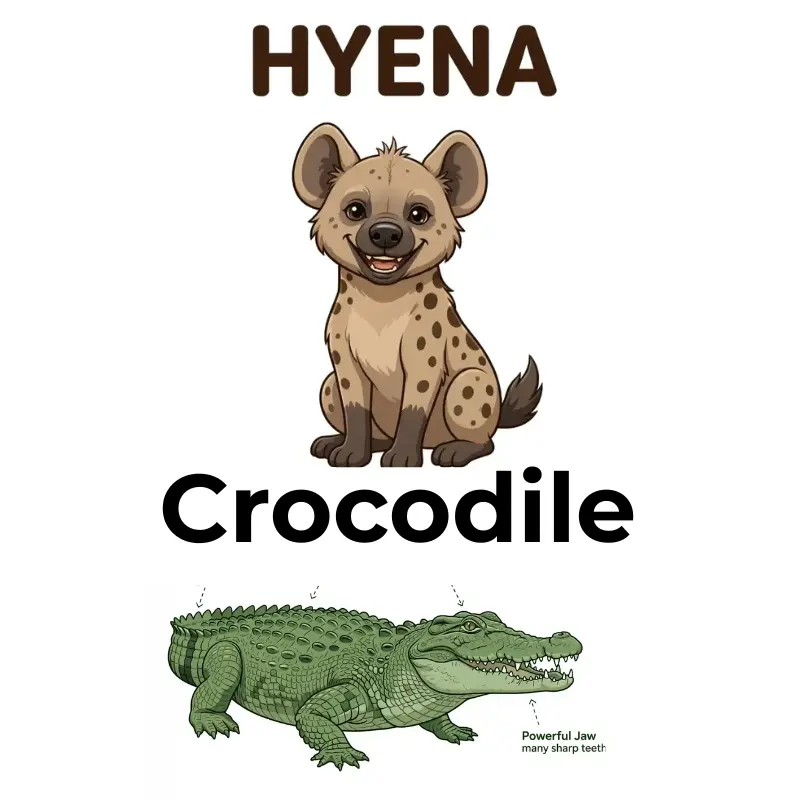
Though to distinguish beasts of prey
A novice might nonplus,
The Crocodile you always may
Tell from the Hyena thus:
Hyenas come with merry smiles;
But if they weep, they are Crocodiles.
- How can a Crocodile be distinguished from a Hyena according to the poet?
कवयित्री के अनुसार Crocodile को Hyena से कैसे अलग पहचाना जा सकता है?
- a) By its roar
- b) By its spots
- c) By whether it smiles or weeps
- d) By its stripes
Answer: c) By whether it smiles or weeps
उत्तर: c) इस बात से कि वह मुस्कुराता है या रोता है।
- Who might find it difficult to distinguish between beasts of prey?
हिंसक जानवरों में अंतर करना किसके लिए कठिन हो सकता है?
Answer: A novice, or a beginner, might find it difficult to distinguish between beasts of prey.
उत्तर: एक novice, अर्थात् नौसिखिए व्यक्ति के लिए हिंसक जानवरों में अंतर करना कठिन हो सकता है।
- How does a Hyena appear according to the poet?
कवयित्री के अनुसार Hyena कैसा दिखाई देता है?
Answer: A Hyena appears to come with a merry smile.
उत्तर: Hyena प्रसन्न मुस्कान के साथ आता हुआ दिखाई देता है।
- How can one identify a Crocodile according to the poet?
कवयित्री के अनुसार Crocodile की पहचान कैसे की जा सकती है?
Answer: If the animal weeps, it can be identified as a Crocodile.
उत्तर: यदि जानवर रोता हुआ दिखाई दे, तो उसे Crocodile के रूप में पहचाना जा सकता है।
- What is humorous about the distinction between the Hyena and the Crocodile?
Hyena और Crocodile के बीच अंतर बताने में क्या हास्य है?
Answer: The poet humorously suggests that a Hyena can be identified by its merry smile, while a Crocodile can be identified by its tears. The idea is funny because these expressions are based on popular beliefs about these animals.
उत्तर: कवयित्री मज़ाकिया ढंग से बताती हैं कि Hyena की पहचान उसकी प्रसन्न मुस्कान से और Crocodile की पहचान उसके आँसुओं से की जा सकती है। यह विचार हास्यपूर्ण है क्योंकि यह इन जानवरों से जुड़ी लोकप्रिय धारणाओं पर आधारित है।
Last Stanza
The true Chameleon is small,
A lizard sort of thing;
He hasn’t any ears at all,
And not a single wing.
If there is nothing on the tree,
’Tis the Chameleon you see.

- How can the Chameleon be identified according to the poet?
कवयित्री के अनुसार Chameleon की पहचान कैसे की जा सकती है?
- a) By its loud roar
- b) By its black stripes
- c) By seeing nothing on the tree
- d) By its merry smile
Answer: c) By seeing nothing on the tree
उत्तर: c) पेड़ पर कुछ भी दिखाई न देने से।
- What does the Chameleon look like?
Chameleon कैसा दिखाई देता है?
Answer: The Chameleon is a small, lizard-like creature.
उत्तर: Chameleon एक छोटा, छिपकली जैसा जीव होता है।
- What two things does the Chameleon not have?
Chameleon के पास कौन-सी दो चीजें नहीं होती हैं?
Answer: The Chameleon has no ears and no wings.
उत्तर: Chameleon के न तो कान होते हैं और न ही पंख होते हैं।
- How does the poet humorously suggest that a Chameleon can be identified?
कवयित्री ने हास्यपूर्ण ढंग से Chameleon की पहचान कैसे बताई है?
Answer: The poet says that if you look at a tree and see nothing on it, you can assume that a Chameleon is there.
उत्तर: कवयित्री कहती हैं कि यदि आप पेड़ को देखें और उस पर कुछ भी दिखाई न दे, तो आप समझ सकते हैं कि वहाँ Chameleon है।
- What is humorous about the last two lines?
अंतिम दो पंक्तियों में क्या हास्य है?
Answer: The humour lies in the fact that the poet suggests identifying the Chameleon when it cannot be seen. Its ability to blend with its surroundings makes the idea funny.
उत्तर: हास्य इस बात में है कि कवयित्री Chameleon की पहचान उसे दिखाई न देने पर करने को कहती हैं। उसका अपने आसपास के वातावरण में घुल-मिल जाना इस विचार को मज़ेदार बनाता है।
How to Tell Wild Animals Important Questions and Answers –
- How does the poet suggest that one can identify the Asian Lion?
कवयित्री के अनुसार Asian Lion की पहचान कैसे की जा सकती है?
Answer: The poet says that a large tawny beast roaring at you while you are dying can be identified as the Asian Lion.
कवयित्री कहती हैं कि मरते समय आप पर दहाड़ने वाले बड़े पीले-भूरे जानवर को Asian Lion के रूप में पहचाना जा सकता है।
- How can you identify the Bengal Tiger according to the poet?
कवयित्री के अनुसार Bengal Tiger की पहचान कैसे की जा सकती है?
Answer: A Bengal Tiger can be identified by its black stripes on a yellow body. Ironically, you may identify it after it eats you.
Bengal Tiger की पहचान पीले शरीर पर काली धारियों से होती है। विडम्बना यह है कि उसे खाने के बाद ही आप उसे पहचान पाएँगे।
- How does the poet describe the Leopard?
कवयित्री Leopard का वर्णन किस प्रकार करती हैं?
Answer: The Leopard has a spotted hide and repeatedly leaps on its victim. Crying in pain cannot stop it from attacking again.
Leopard की धब्बेदार खाल होती है और वह अपने शिकार पर बार-बार छलाँग लगाता है। दर्द से चीखने पर भी वह दोबारा हमला करता है।
- How can one identify a Bear in the poem?
कविता में Bear की पहचान कैसे की जा सकती है?
Answer: According to the poet, if a creature hugs you very, very hard, you can be sure that it is a Bear.
कवयित्री के अनुसार, यदि कोई जीव आपको बहुत कसकर गले लगाए, तो निश्चित रूप से वह Bear है।
- How does the poet distinguish between a Hyena and a Crocodile?
कवयित्री Hyena और Crocodile में अंतर कैसे बताती हैं?
Answer: A Hyena is identified by its merry smile, while a Crocodile is identified by its tears. The poet humorously uses popular beliefs.
Hyena की पहचान उसकी प्रसन्न मुस्कान और Crocodile की पहचान उसके आँसुओं से होती है। कवयित्री लोकप्रिय धारणाओं का हास्यपूर्ण प्रयोग करती हैं।
- How does the poet describe the Chameleon?
कवयित्री Chameleon का वर्णन किस प्रकार करती हैं?
Answer: The Chameleon is a small, lizard-like creature without ears or wings. It blends with its surroundings so well that it becomes difficult to see.
Chameleon बिना कान और पंखों वाला छोटा, छिपकली जैसा जीव है। वह अपने वातावरण में इतनी अच्छी तरह घुल-मिल जाता है कि दिखाई देना कठिन हो जाता है।
- How does the poem create humour?
कविता में हास्य कैसे उत्पन्न होता है?
Answer: The poem creates humour through exaggeration, irony, wordplay and absurd situations, especially when animals are identified after attacking the person.
कविता में अतिशयोक्ति, विडम्बना, शब्द-खेल और हास्यास्पद परिस्थितियों के माध्यम से हास्य उत्पन्न होता है, विशेषकर जब जानवर की पहचान हमले के बाद होती है।
- What is the central idea of How to Tell Wild Animals?
How to Tell Wild Animals की केंद्रीय भावना क्या है?
Answer: The poem humorously presents ways of identifying wild animals and entertains readers through irony, exaggeration, rhyme and playful language.
कविता जंगली जानवरों की पहचान के तरीकों को हास्यपूर्वक प्रस्तुत करती है और विडम्बना, अतिशयोक्ति, तुक तथा मनोरंजक भाषा के माध्यम से पाठकों का मनोरंजन करती है।
- Why is the poem called humorous?
कविता को हास्यपूर्ण क्यों कहा जाता है?
Answer: The poem is humorous because the poet gives dangerous and impractical methods of identifying animals, often after they have attacked the person.
कविता हास्यपूर्ण है क्योंकि कवयित्री जानवरों की पहचान के खतरनाक और अव्यावहारिक तरीके बताती हैं, जिनमें अक्सर पहचान जानवर के हमला करने के बाद होती है।
- What is the significance of the title How to Tell Wild Animals?
How to Tell Wild Animals शीर्षक का क्या महत्व है?
Answer: The title suggests a guide to identifying wild animals, but the poet turns this idea into humorous and exaggerated situations, making the poem entertaining.
शीर्षक जंगली जानवरों की पहचान की जानकारी देने का संकेत देता है, लेकिन कवयित्री इस विचार को हास्यपूर्ण और अतिशयोक्तिपूर्ण परिस्थितियों में बदलकर कविता को मनोरंजक बना देती हैं।
Long Answer Type Questions – How to Tell Wild Animals
- How does Carolyn Wells use humour to describe different wild animals in the poem?
कवयित्री Carolyn Wells कविता में विभिन्न जंगली जानवरों का वर्णन करने के लिए हास्य का प्रयोग कैसे करती हैं?
Answer:
Carolyn Wells uses humour, irony and exaggeration to describe wild animals. The lion is identified while the person is dying, the tiger after eating him, and the bear by its tight hug. These dangerous situations make the poem amusing.
Carolyn Wells हास्य, विडम्बना और अतिशयोक्ति का प्रयोग करती हैं। शेर की पहचान मरते समय, Tiger की खाने के बाद और Bear की कसकर गले लगाने से होती है। ये खतरनाक परिस्थितियाँ कविता को मनोरंजक बनाती हैं।
- Describe the different ways of identifying the wild animals mentioned in the poem.
कविता में बताए गए विभिन्न जंगली जानवरों की पहचान करने के तरीकों का वर्णन कीजिए।
Answer:
The Asian Lion roars, the Bengal Tiger has black stripes on a yellow body, and the Leopard has spots. The Bear hugs tightly, the Hyena smiles, the Crocodile weeps, and the Chameleon becomes invisible by blending with its surroundings.
Asian Lion दहाड़ता है, Bengal Tiger के पीले शरीर पर काली धारियाँ और Leopard पर धब्बे होते हैं। Bear कसकर गले लगाता है, Hyena मुस्कुराता है, Crocodile रोता है और Chameleon वातावरण में घुल-मिल जाता है।
- How does the poet make the poem interesting and entertaining?
कवयित्री कविता को रोचक और मनोरंजक कैसे बनाती हैं?
Answer:
The poet makes the poem entertaining through rhyme, rhythm, wordplay, humour and exaggeration. She presents dangerous encounters with animals as funny ways of identifying them. Her playful language and unexpected situations keep the reader interested.
कवयित्री तुक, लय, शब्द-खेल, हास्य और अतिशयोक्ति के माध्यम से कविता को मनोरंजक बनाती हैं। वह जानवरों से होने वाली खतरनाक मुलाकातों को पहचान के मज़ेदार तरीकों के रूप में प्रस्तुत करती हैं।
- What role does exaggeration play in How to Tell Wild Animals?
How to Tell Wild Animals में अतिशयोक्ति की क्या भूमिका है?
Answer: Exaggeration makes the poem humorous and lively. The poet suggests that a person can identify the lion while dying, the tiger after being eaten, and the leopard after repeated attacks. These exaggerated situations create comic effects.
अतिशयोक्ति कविता को हास्यपूर्ण और जीवंत बनाती है। कवयित्री शेर की पहचान मरते समय, Tiger की खाए जाने के बाद और Leopard की बार-बार चोट के बाद बताती हैं। ऐसी अतिशयोक्तियाँ हास्य उत्पन्न करती हैं।
- What is the central message of the poem How to Tell Wild Animals?
How to Tell Wild Animals कविता का केंद्रीय संदेश क्या है?
Answer:
The poem does not convey a serious moral message. Instead, it aims to entertain readers through humorous descriptions of wild animals. It shows how language, rhyme, irony and imagination can turn a simple subject into an amusing poem.
कविता का कोई गंभीर नैतिक संदेश नहीं है। इसका मुख्य उद्देश्य जंगली जानवरों के हास्यपूर्ण वर्णन द्वारा पाठकों का मनोरंजन करना है। यह दिखाती है कि भाषा, तुक, विडम्बना और कल्पना एक साधारण विषय को मनोरंजक बना सकते हैं।