
Poets and Pancakes Questions and Answers Class 12
आज के इस blog post “Poets and Pancakes Questions and Answers Class 12” में हम Class 12 के सबसे interesting chapters में से एक, Poets and Pancakes के Questions and Answer पढ़ेंगे। पिछले blog post में हमने Poets and Pancakes summary को detail में पढ़ा था, जहाँ हमने Gemini Studios की मज़ेदार दुनिया और उसके किरदारों को समझा था। यह post खास तौर पर उन students के लिए है जो Poets and Pancakes Questions and Answers Class 12 की तैयारी कर रहे हैं और summary पढ़ने के बाद अब exam-oriented questions का अभ्यास करना चाहते हैं।
अगर आपने अभी तक Summary नहीं पढ़ा है, तो पहले यहाँ पढ़ें – Poets and Pancakes Summary in Hindi & English
Poets and Pancakes Questions and Answers Class 12-1
Think as you read-1
1. What does the writer mean by ‘the fiery misery’ of those subjected to make-up?
Answer:
- By ‘fiery misery’, the writer means the terrible discomfort and burning sensation the actors felt. The make-up was of a brand called Pancake, which was very thick and heavy. Under the hot studio lights, their faces burned and sweated, but they had to bear it.
- ‘Fiery misery’ से लेखक का मतलब अभिनेताओं द्वारा महसूस की गई भयानक तकलीफ और जलन से है। मेक-अप ‘पैनकेक’ नामक ब्रांड का था, जो बहुत मोटा और भारी होता था। स्टूडियो की तेज़ गर्म रोशनियों के नीचे उनके चेहरे जलते और पसीने से तर हो जाते थे, लेकिन उन्हें यह सब सहना पड़ता था।
2. What is the example of national integration that the author refers to?
Answer:
- The author calls the make-up department of Gemini Studios a perfect example of national integration. The department had people from different parts of India — a Bengali, a Maharashtrian, a Kannadiga, an Andhra, a Madras Indian (Tamil), a Christian and a Muslim — all working together in one room. This shows unity in diversity.
- लेखक जेमिनी स्टूडियोज के मेक-अप विभाग को राष्ट्रीय एकता का एक आदर्श उदाहरण बताता है। इस विभाग में भारत के अलग-अलग हिस्सों के लोग थे — एक बंगाली, एक महाराष्ट्रीयन, एक कन्नड़, एक आंध्र, एक मद्रासी (तमिल), एक ईसाई और एक मुस्लिम — सभी एक ही कमरे में मिलकर काम करते थे। यह विविधता में एकता को दर्शाता है।
3. What work did the ‘office boy’ do in the Gemini Studios? Why did he join the studios? Why was he disappointed?
Answer:
- The office boy worked in the make-up department. His job was to do the make-up of the crowd actors and slap paint on their faces during crowd-shooting. He had joined Gemini Studios with the dream of becoming a great actor, screenwriter, director or lyricist. He was disappointed because he remained just an office boy doing a low-level job and could not achieve his ambition.
- ऑफिस बॉय मेक-अप विभाग में काम करता था। उसका काम भीड़ में काम करने वाले कलाकारों (crowd actors) का मेक-अप करना और उनके चेहरों पर पेंट लगाना था। वह जेमिनी स्टूडियोज में एक बड़ा अभिनेता, पटकथा लेखक, निर्देशक या गीतकार बनने का सपना लेकर आया था। वह निराश था क्योंकि वह केवल एक ऑफिस बॉय बनकर रह गया और अपने लक्ष्य को प्राप्त नहीं कर सका।
4. Why did the author appear to be doing nothing at the studios?
Answer:
- The author’s actual job was to cut newspaper clippings on various topics and maintain them in files. This work was not very visible like shooting or acting. Since he was mostly seen sitting in his room cutting newspapers, other people thought he was doing nothing and wasting his time.
- लेखक का असली काम विभिन्न विषयों पर अखबारों की कतरनें काटना और उन्हें फाइलों में सुरक्षित रखना था। यह काम शूटिंग या अभिनय की तरह दिखाई नहीं देता था। चूँकि वह ज्यादातर अपने कमरे में अखबार काटते हुए ही दिखाई देता था, इसलिए दूसरे लोग सोचते थे कि वह कुछ नहीं कर रहा है और अपना समय बर्बाद कर रहा है।
Poets and Pancakes Questions and Answers Class 12-2
Think as you read-2
- Why was the office boy frustrated? Who did he show his anger on?
Answer:
- The office boy was frustrated because he had come to Gemini Studios dreaming of becoming a top star, writer, director or lyricist, but he remained only a low-paid boy doing crowd make-up. He thought his literary talent was wasted. He showed his anger and frustration on Kothamangalam Subbu, whom he considered responsible for all his woes and failures.
- ऑफिस बॉय निराश था क्योंकि वह एक बड़ा स्टार, लेखक, निर्देशक या गीतकार बनने का सपना लेकर आया था, लेकिन वह केवल भीड़ का मेक-अप करने वाला रह गया। उसे लगता था कि उसकी प्रतिभा बर्बाद हो रही है। वह अपना सारा गुस्सा कोठामंगलम सुब्बू पर निकालता था, जिसे वह अपनी असफलता के लिए जिम्मेदार मानता था।
- Who was Subbu’s principal?
Answer:
- Subbu’s principal was Mr. S.S. Vasan, the boss and founder of Gemini Studios. Subbu was No. 2 in the studios and was totally loyal to him.
- सुब्बू के बॉस श्री एस.एस. वासन थे, जो जेमिनी स्टूडियोज के मालिक और संस्थापक थे। सुब्बू स्टूडियो में दूसरे नंबर पर था और पूरी तरह से उनके प्रति वफादार था।
Q3. Subbu is described as a many-sided genius. List four of his special abilities.
Answer:
1. A man of ideas: If a producer was not satisfied, Subbu could immediately give four ways of a scene, like a rat pouring affection on its victim’s offspring, and in a minute, he could give fourteen more alternatives.
2. A great poet and writer: He was a poet who deliberately wrote for the common masses. He composed truly original ‘story poems’ in folk style and wrote a big novel named Thillana Mohanambal with many characters and recreated the life of Devadasis.
3. An amazing actor: He was an amazing actor. He never wanted lead roles, but whatever small or subsidiary role he played, he performed better than the main hero.
4. A helpful and charitable person: He had genuine love for everyone. His house was a permanent residence for many relatives and friends, and he happily fed and supported them. He gave direction and definition to Gemini Studios in its golden years.
- विचारों वाला व्यक्ति: अगर निर्माता संतुष्ट नहीं होता था, तो सुब्बू तुरंत किसी दृश्य के चार तरीके बता देता था, जैसे चूहे का अपने शिकार के बच्चों पर प्यार लुटाना, और एक मिनट में वह चौदह और विकल्प दे देता था।
- महान कवि और लेखक: वह एक ऐसा कवि था जो जानबूझकर आम जनता के लिए लिखता था। उसने लोक शैली में मौलिक ‘कथा कविताएँ’ लिखीं और थिल्लाना मोहनांबल नामक एक बड़ा उपन्यास लिखा जिसमें कई पात्र थे और जिसमें देवदासियों के जीवन को दर्शाया गया था।
- शानदार अभिनेता: वह एक शानदार अभिनेता था। वह कभी मुख्य भूमिका नहीं चाहता था, लेकिन वह जो भी छोटी भूमिका निभाता था, वह मुख्य हीरो से भी बेहतर अभिनय करता था।
- मददगार और दानी व्यक्ति: उसमें सबके लिए सच्चा प्यार था। उसका घर कई रिश्तेदारों और दोस्तों का स्थायी निवास था, और वह खुशी-खुशी उनका भरण-पोषण करता था। उसने ही जेमिनी स्टूडियोज के सुनहरे वर्षों में उसे दिशा और पहचान दी।
4. Why was the legal adviser referred to as the opposite by others?
Answer:
He was called ‘the opposite’ not because he was creative. In the Story Department, whenever an idea was discussed, the legal adviser would come up with the opposite point of view and spoil it. Also, he was opposite to a normal lawyer – instead of solving a legal problem, he created one. He ruined the career of a very talented actress by recording her outburst on the sets.
उसे ‘द ऑपोजिट’ (विपरीत) इसलिए कहा जाता था क्योंकि कहानी विभाग में जब भी कोई विचार आता था, वह हमेशा उसके विपरीत राय देता था और उसे बिगाड़ देता था। वह एक सामान्य वकील के विपरीत था – समस्या सुलझाने के बजाय उसने एक समस्या पैदा कर दी थी। उसने एक प्रतिभाशाली अभिनेत्री के गुस्से को रिकॉर्ड करके उसका करियर ही खत्म कर दिया था।
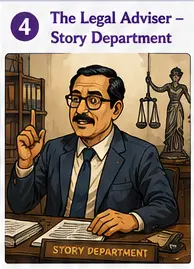
- What made the lawyer stand out from the others at Gemini Studios?
Answer:
The lawyer stood out because of his dress and appearance. While all other members of the Story Department wore khadi dhoti and white khadi shirt, he wore pants, coat and tie. He was the only one who looked modern and different. Also, he was a man of cold logic in a crowd of dreamers and poets.
वकील अपनी वेशभूषा के कारण सबसे अलग दिखता था। जबकि कहानी विभाग के बाकी सभी सदस्य खादी की धोती और सफेद खादी की कमीज पहनते थे, वह पैंट, कोट और टाई पहनता था। वह सपनों और कवियों की भीड़ में तर्क वाला एकमात्र आधुनिक दिखने वाला व्यक्ति था।
Poets and Pancakes Questions and Answers Class 12-3
Think as you read-3
- Did the people at Gemini Studios have any particular political affiliations?
Answer:
Most of the people at Gemini Studios wore khadi and were supporters of Gandhiji and the Congress. They had no definite political party, but they had a natural dislike for communism and communists.
जेमिनी स्टूडियोज के ज्यादातर लोग खादी पहनते थे और गांधीजी और कांग्रेस के समर्थक थे। उनकी किसी खास पार्टी से संबंध नहीं था, लेकिन उन्हें कम्युनिज्म और कम्युनिस्टों से एक स्वाभाविक नफरत थी।
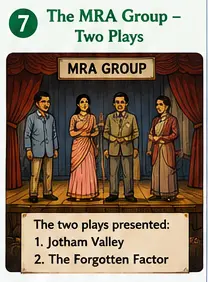
- Why was the Moral Rearmament Army welcomed at the Studios?
Answer:
The MRA was welcomed because Gemini Studios was against communism and MRA was also against communism. So Vasan and his men welcomed them. Secondly, their plays like ‘Jotham Valley’ and ‘The Forgotten Factor’ were very impressive, well-staged and entertaining.
MRA का स्वागत इसलिए किया गया क्योंकि जेमिनी स्टूडियोज कम्युनिज्म के खिलाफ था और MRA भी कम्युनिज्म के खिलाफ था। इसलिए वासन और उनके लोगों ने उनका स्वागत किया। दूसरा, उनके नाटक ‘जोथम वैली’ और ‘द फॉरगॉटन फैक्टर’ बहुत प्रभावशाली और मनोरंजक थे।
- Name one example to show that Gemini Studios was influenced by the plays staged by MRA.
Answer:
For many years after MRA’s visit, Tamil drama copied their sunrise and sunset scenes. A bare stage, a white curtain and flute music were used to show sunrise and sunset in Jotham Valley style.
MRA के जाने के कई सालों तक तमिल नाटकों ने उनके सूर्योदय और सूर्यास्त वाले दृश्यों की नकल की। जोथम वैली की तरह खाली मंच, सफेद पर्दा और बांसुरी के संगीत से सूर्योदय और सूर्यास्त दिखाया जाता था।
- Who was the Boss of Gemini Studios?
Answer:
S.S. Vasan was the Boss and owner of Gemini Studios.
एस.एस. वासन जेमिनी स्टूडियोज के बॉस और मालिक थे।
- What caused the lack of communication between the Englishman and the people at Gemini Studios?
Answer:
The Englishman’s accent was unfamiliar and his topic – English poetry – was also unfamiliar to the staff, who knew only Tamil and Hindi films. They could not understand what he was saying and he could not understand their Tamil/Hindi. So there was no real communication.
अंग्रेज का लहजा अपरिचित था और उसका विषय – अंग्रेजी कविता – भी स्टाफ के लिए अपरिचित था, जो केवल तमिल और हिंदी फिल्में जानते थे। वे समझ नहीं पाए कि वह क्या कह रहा है और वह उनकी तमिल/हिंदी नहीं समझ पाया। इसलिए कोई संवाद नहीं हो पाया।
- Why is the Englishman’s visit referred to as an unexplained mystery?
Answer:
It is called a mystery because no one at the studios knew who he was or why he came. They did not understand his speech. Even his identity – whether he was a poet or an editor – was not clear. The author came to know many years later that he was Stephen Spender, the editor of the magazine ‘The Encounter’.
इसे एक रहस्य इसलिए कहा गया है क्योंकि स्टूडियो में कोई नहीं जानता था कि वह कौन है और क्यों आया है। कोई उसकी बात समझ नहीं पाया। उसकी पहचान – वह कवि है या संपादक – भी स्पष्ट नहीं थी। लेखक को कई साल बाद पता चला कि वह ‘द एनकाउंटर’ पत्रिका के संपादक स्टीफन स्पेंडर थे।
Poets and Pancakes Questions and Answers Class 12-4
Think as you read-4
- Who was the English visitor to the studios?
Answer:
The English visitor was ‘Stephen Spender’, a famous English poet, essayist and editor. He was the editor of the British magazine ‘The Encounter’. He visited Gemini Studios in the 1950s when the studio was hosting the Moral Rearmament Army.
अंग्रेज मेहमान ‘स्टीफन स्पेंडर’ थे, जो एक प्रसिद्ध अंग्रेजी कवि, निबंधकार और संपादक थे। वे ब्रिटिश पत्रिका ‘द एनकाउंटर’ के संपादक थे। वे 1950 के दशक में जेमिनी स्टूडियोज आए थे जब स्टूडियो में मोरल री-आर्मामेंट आर्मी का कार्यक्रम हो रहा था।
- How did the author discover who the English visitor to the studios was?
Answer:
The author discovered his identity many years later, by chance. He was at the British Council Library or at Gemini Studios when he saw a copy of the magazine ‘The Encounter’. He saw that its editor was Stephen Spender. Then he also read the book ‘The God That Failed’ where Stephen Spender was one of the six writers. Then he realized that the same Stephen Spender had visited Gemini Studios.
लेखक को उसकी पहचान कई साल बाद संयोग से पता चली। वह ब्रिटिश काउंसिल लाइब्रेरी में था जब उसने ‘द ‘एनकाउंटर’ पत्रिका की एक प्रति देखी। उसने देखा कि उसके संपादक स्टीफन स्पेंडर हैं। फिर उसने ‘द गॉड दैट फेल्ड’ किताब भी पढ़ी जिसमें स्टीफन स्पेंडर छह लेखकों में से एक थे। तब उसे एहसास हुआ कि वही स्टीफन स्पेंडर जेमिनी स्टूडियोज आए थे।
- What does The God That Failed refer to?
Answer:
‘The God That Failed’ is a book – a collection of six essays by six eminent writers who were once attracted to Communism but later got disillusioned with it. Stephen Spender was one of the six contributors. The book describes the failure of communism as a God.
‘द गॉड दैट फेल्ड’ एक किताब है – छह प्रसिद्ध लेखकों के छह निबंधों का संग्रह जो कभी कम्युनिज्म की ओर आकर्षित हुए थे लेकिन बाद में उससे उनका मोहभंग हो गया। स्टीफन स्पेंडर उन छह लेखकों में से एक थे। यह किताब कम्युनिज्म को एक असफल ईश्वर के रूप में बताती है।
Poets and Pancakes Questions and Answers Class 12-5
Think as you read-5
- The author has used gentle humour to point out human foibles. Pick out instances.
Answer:
Asokamitran uses very gentle, non-hurting humour:
- The make-up room: He calls the make-up department a “hair-cutting salon” which was lit with bright lights and had mirrors, where pancake was slapped on faces and there was “fiery misery”.
- The office boy: He had joined the studio dreaming of becoming a big star, director or writer, but remained only a make-up boy. He blames Subbu for all his failures.
- Subbu: Subbu’s house was a permanent residence for dozens of relatives who lived there forever, which shows his charity in a funny way.
- The Legal Adviser: He was called ‘the opposite’ because he would always give opposite opinions and he ruined an actress’s career by his legal act.
- The English visitor: An English poet with a strange accent was giving a lecture on poetry to Tamil film-makers who knew nothing of English poetry – a complete mismatch.
- This humour makes the account lively and not boring.
लेखक अशोकमित्रन ने लोगों की कमजोरियों को बहुत ही हल्के और मीठे हास्य के साथ दिखाया है:
- मेक-अप रूम: वे मेक-अप विभाग को एक नाई की दुकान जैसा बताते हैं, जहाँ तेज रोशनियों के नीचे चेहरों पर ‘पैनकेक’ नाम का पेस्ट थोपा जाता था और कलाकारों को भयानक जलन सहनी पड़ती थी।
- ऑफिस बॉय: वह स्टूडियो में बड़ा हीरो, निर्देशक या लेखक बनने का सपना लेकर आया था, लेकिन केवल भीड़ का मेक-अप करने वाला बनकर रह गया। अपनी असफलता के लिए वह सुब्बू को दोष देता था।
- सुब्बू का घर: सुब्बू का घर उसके दर्जनों रिश्तेदारों और जान-पहचान वालों का स्थायी घर बन गया था, जो हमेशा वहीं रहते थे। यह उसकी दानशीलता को मजेदार तरीके से दिखाता है।
- कानूनी सलाहकार: उसे ‘द ऑपोजिट’ (विपरीत) कहा जाता था, क्योंकि वह हमेशा दूसरों की राय के उलट बोलता था और उसने अपनी एक कानूनी हरकत से एक अभिनेत्री का करियर ही खत्म कर दिया था।
- अंग्रेज मेहमान: एक अजीब लहजे वाला अंग्रेज कवि तमिल फिल्म निर्माताओं को, जिन्हें अंग्रेजी कविता का कुछ भी पता नहीं था, कविता पर भाषण दे रहा था – यह एक बहुत ही हास्यास्पद बेमेल था।
2. Why was Kothamangalam Subbu considered No. 2 in Gemini Studios?
Answer:
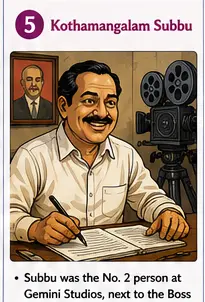
Subbu was considered No. 2 because:
- He was the most loyal and closest person to the Boss, S.S. Vasan.
- He was a many-sided genius – poet, writer, actor and film-maker.
- He always had a solution for every problem and could give many ideas instantly.
- He gave direction and definition to Gemini Studios during its golden years. Without him, film-making was impossible.
Therefore everyone regarded him as second-in-command after the Boss.
- कोठामंगलम सुब्बू को जेमिनी स्टूडियोज में नंबर 2 इसलिए माना जाता था क्योंकि:
- वह बॉस, श्री एस.एस. वासन का सबसे वफादार और सबसे करीबी व्यक्ति था।
- वह बहुमुखी प्रतिभा का धनी था – वह एक साथ कवि, लेखक, अभिनेता और फिल्म-निर्माता था।
- उसके पास हर मुश्किल का हल था और वह किसी भी समस्या के लिए तुरंत कई नए आइडिया दे सकता था।जेमिनी स्टूडियोज के सुनहरे दौर में उसी ने स्टूडियो को एक दिशा और पहचान दी थी। उसके बिना फिल्म बनाना असंभव था।
इसीलिए सब उसे बॉस के बाद स्टूडियो का दूसरा सबसे महत्वपूर्ण व्यक्ति मानते थे।
- How does the author describe the incongruity of an English poet addressing the audience at Gemini Studios?
Answer:
The incongruity was that Stephen Spender, a famous English poet talking about serious English poetry and his magazine ‘The Encounter’, was speaking to a simple Tamil audience at Gemini Studios. The audience consisted of film-makers, actors and boys who knew only Tamil films and had no knowledge or interest in English poetry. They could not understand his accent and his high literary topic. So it was a funny mismatch – a high-class English poet lecturing to people who were totally unfit for such a lecture.
असंगति यह थी कि स्टीफन स्पेंडर, एक प्रसिद्ध अंग्रेजी कवि जो गंभीर अंग्रेजी कविता और अपनी पत्रिका ‘द एनकाउंटर’ के बारे में बात कर रहे थे, जेमिनी स्टूडियोज में एक साधारण तमिल दर्शकों को संबोधित कर रहे थे। दर्शकों में फिल्म निर्माता, अभिनेता और लड़के थे जो केवल तमिल फिल्मों को जानते थे और उन्हें अंग्रेजी कविता का कोई ज्ञान या रुचि नहीं थी। वे उनका लहजा और उनका उच्च साहित्यिक विषय नहीं समझ सके। तो यह एक हास्यास्पद बेमेल था – एक उच्च वर्ग का अंग्रेजी कवि ऐसे लोगों को व्याख्यान दे रहा था जो ऐसे व्याख्यान के लिए बिल्कुल अयोग्य थे।
- What do you understand about the author’s literary inclinations from the account?
Answer:
We understand that the author Asokamitran had deep literary interests.
- He was not just a film writer but a serious reader – he read English magazines like ‘The Encounter’.
- He was curious about poets and writers like Stephen Spender.
- He had read the book ‘The God That Failed’ and knew about contemporary writers.
- Though his job at Gemini was only cutting newspaper clippings, he kept his literary taste alive. This shows he was a true lover of literature.
हम समझते हैं कि लेखक अशोकमित्रन की साहित्य में गहरी रुचि थी।
- वह सिर्फ एक फिल्म लेखक नहीं बल्कि एक गंभीर पाठक था – वह ‘द एनकाउंटर’ जैसी अंग्रेजी पत्रिकाएँ पढ़ता था।
- वह स्टीफन स्पेंडर जैसे कवियों और लेखकों के बारे में जिज्ञासु था।
- उसने ‘द गॉड दैट फेल्ड’ किताब पढ़ी थी और समकालीन लेखकों के बारे में जानता था।
- हालांकि जेमिनी में उसका काम केवल अखबार की कतरनें काटना था, उसने अपनी साहित्यिक रुचि को जीवित रखा। यह दर्शाता है कि वह साहित्य का सच्चा प्रेमी था।