
A Photograph Questions & Answers
- A Photograph by Shirley Toulson Class 11 English की एक भावपूर्ण कविता है, जिसमें यादों, समय के बीतने और प्रिय व्यक्ति की मृत्यु से होने वाले दुःख को दर्शाया गया है। कवयित्री एक पुरानी तस्वीर के माध्यम से अपनी माँ के बचपन और उनसे जुड़ी यादों को याद करती है। यह कविता बताती है कि समय बीत जाता है, लेकिन कुछ यादें हमेशा हमारे साथ रहती हैं।
- इस पोस्ट में A Photograph Questions and Answers को Clear and Easy Hindi Explanation के साथ समझाया गया है, ताकि Hindi Medium Students कविता को आसानी से समझ सकें। साथ ही, चारों stanzas की explanation को AI-generated visuals के माध्यम से सरल और रोचक तरीके से प्रस्तुत किया गया है, जिससे poem को समझना और याद रखना आसान हो जाता है।
- Related post -1. Discovering Tut The Saga Continues Hindi Translation Part 2 2. The Portrait of a Lady Class 11 Questions and Answers in Hindi and English Explained clearly
A Photograph Explanation – Stanza 1
The cardboard shows me how it was
When the two girl cousins went paddling,
Each one holding one of my mother’s hands,
And she the big girl — some twelve years or so.
The cardboard shows me how it was”
1.Hindi Translation
यह पुरानी फोटोग्राफ (कार्डबोर्ड पर चिपकी तस्वीर) कवयित्री को बताती है कि वह समय कैसा था।
“When the two girl cousins went paddling,”
जब कवयित्री की माँ अपनी दो चचेरी बहनों के साथ समुद्र के पानी में पैर चलाते हुए घूम रही थीं।
“Each one holding one of my mother’s hands,”
दोनों लड़कियों ने कवयित्री की माँ का एक-एक हाथ पकड़ रखा था।
“And she the big girl — some twelve years or so.”
उन तीनों में कवयित्री की माँ सबसे बड़ी लड़की थीं और उस समय उनकी उम्र लगभग बारह वर्ष थी।
2. Important Words
| Word | Meaning in English | हिंदी में अर्थ |
|---|---|---|
| Cardboard | Thick paper on which photo is pasted | मोटा कागज जिस पर फोटो चिपकी है |
| Paddling | Walking with bare feet in shallow water | उथले पानी में नंगे पैर चलना |
| Big girl | The eldest among the three girls | तीन लड़कियों में सबसे बड़ी |
3.Reference:
These lines are the opening lines of the poem “A Photograph,” written by Shirley Toulson
4.Context:
In these lines, the poet looks at an old photograph of her mother and recalls her mother’s childhood.
5. Explanation:
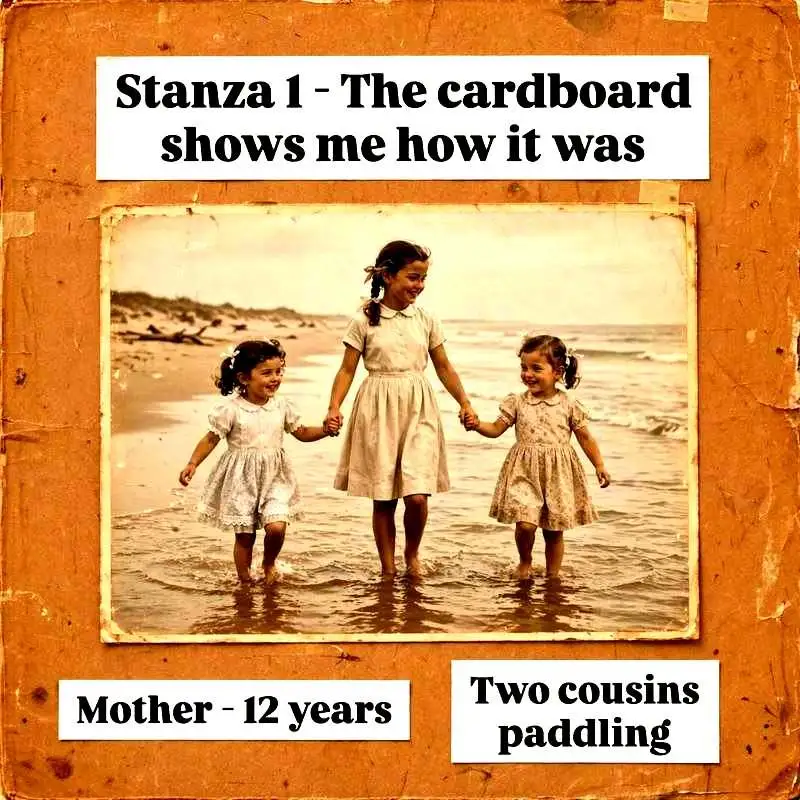
- The poet is looking at a very old photograph of her mother pasted on cardboard. The photo was taken when her mother was about twelve years old. She had gone to the beach with her two younger cousins. They were paddling in the sea water. The poet’s mother was standing in the middle and holding the hands of her two cousins. This shows a happy and innocent moment of her mother’s childhood.
- कवयित्री अपनी माँ की एक बहुत पुरानी तस्वीर देख रही है जो कार्डबोर्ड पर चिपकी हुई है। यह फोटो तब ली गई थी जब उनकी माँ लगभग बारह साल की थी। वह अपनी दो छोटी चचेरी बहनों के साथ समुद्र तट पर गई थी। वे समुद्र के पानी में अठखेलियाँ कर रही थीं। कवयित्री की माँ बीच में खड़ी थी और उसने अपनी दोनों बहनों के हाथ पकड़ रखे थे। यह उनकी माँ के बचपन का एक खुशहाल और मासूम पल दिखाता है।
A Photograph Explanation – Stanza 2
All three stood still to smile through their hair
At the uncle with the camera. A sweet face,
My mother's, that was before I was born. And the sea,
which appears to have changed less,
Washed their terribly transient feet.
1. Hindi Translation
- All three stood still to smile through their hair
- तीनों अपने बालों के बीच से मुस्कुराने के लिए स्थिर खड़ी रहीं,
- At the uncle with the camera.
- कैमरा लिए हुए अपने चाचा की ओर देखकर।
- A sweet face, My mother’s, that was before I was born.
- मेरी माँ का चेहरा बहुत प्यारा था, यह उस समय की बात है जब मेरा जन्म भी नहीं हुआ था।
- And the sea, which appears to have changed less,
- और समुद्र, जो कम बदला हुआ प्रतीत होता है,
- Washed their terribly transient feet.
- उनके क्षणभंगुर पैरों को धो रहा था।
2. Important Words
| Word | Meaning in English | हिंदी में अर्थ |
| Stood still | Stopped moving to pose for a photo | फोटो के लिए बिना हिले खड़े होना |
| Sweet face | Lovely and innocent face | प्यारा और मासूम चेहरा |
| Transient | Temporary, not lasting long | अस्थायी, क्षणभंगुर |
| Terribly transient feet | Human life is short and mortal | मानव जीवन छोटा और नश्वर है |
3. Reference:
These lines have been taken from the poem “A Photograph” written by Shirley Toulson.
4. Context:
Here, the poet describes the old photograph of her mother and her two cousins at the beach.
5. Explanation
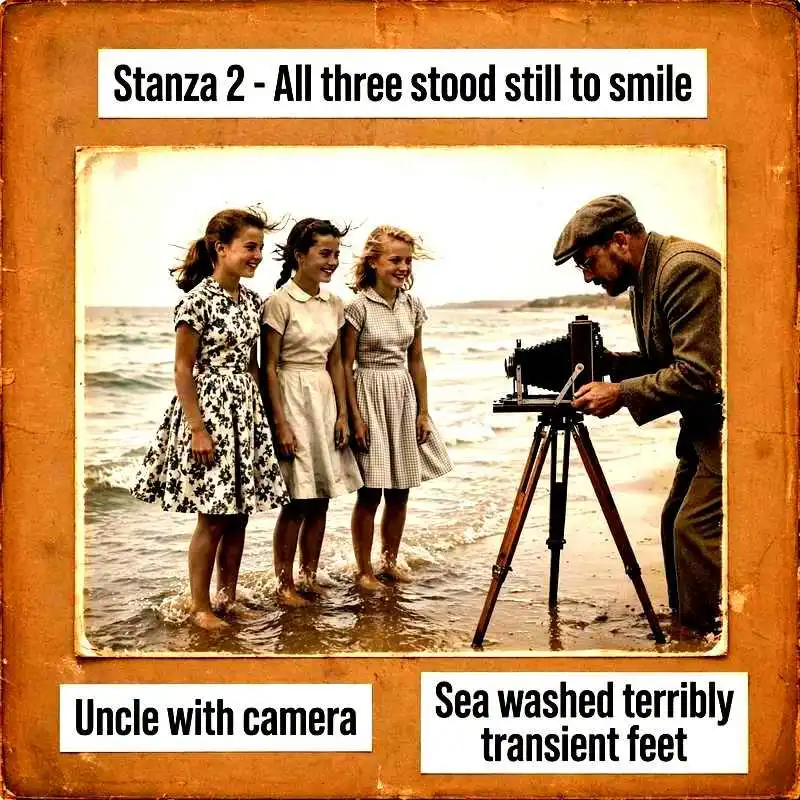
- In this stanza, the poet says that all three girls stood still and smiled at the camera held by their uncle. Their hair was blown by the sea wind and was covering their faces. The poet looks at her mother’s sweet face in the photograph and realizes that this was long before she was born. Then she compares the sea and the human life. The sea has not changed much over the years, but the human beings in the photograph have changed completely. The feet of the girls were temporary because human life is short and mortal, while the sea is permanent and everlasting.
- इस पद्य में कवयित्री कहती है कि तीनों लड़कियाँ स्थिर खड़ी रहीं और अपने चाचा द्वारा पकड़े गए कैमरे की ओर देखकर मुस्कुराईं। समुद्र की हवा से उनके बाल उड़कर उनके चेहरों पर आ रहे थे। कवयित्री तस्वीर में अपनी माँ का प्यारा चेहरा देखती है और महसूस करती है कि यह उसके जन्म से बहुत पहले की बात है। फिर वह समुद्र और मानव जीवन की तुलना करती है। समुद्र सालों में ज्यादा नहीं बदला है, लेकिन तस्वीर में मौजूद इंसान पूरी तरह से बदल गए हैं। उन लड़कियों के पैर क्षणभंगुर थे क्योंकि मानव जीवन छोटा और नश्वर है, जबकि समुद्र स्थायी और शाश्वत है।
A Photograph Explanation – Stanza 3
Some twenty — thirty — years later
She’d laugh at the snapshot. “See Betty
And Dolly,” she’d say, “and look how they
Dressed us for the beach.” The sea holiday
Was her past, mine is her laughter. Both wry
With the laboured ease of loss.
1.Important words
| Word | Meaning in English | हिंदी में अर्थ |
| Snapshot | A photograph | तस्वीर, फोटो |
| Betty and Dolly | Names of the mother’s cousins | माँ की चचेरी बहनों के नाम |
| Wry | A twisted, ironic or mocking smile/laugh | व्यंग्य या तीखी हँसी |
| Laboured | Done with great difficulty and effort | बड़ी कठिनाई और मेहनत से किया गया |
| Ease of loss | Trying to appear comfortable after losing something precious | किसी प्रिय चीज़ को खोने के बाद सहज दिखने की कोशिश |
2. Hindi Translation
- “Some twenty — thirty — years later”
- लगभग बीस-तीस वर्ष बाद, कवयित्री की माँ उस तस्वीर को देखकर हँसती थीं।
- “She’d laugh at the snapshot. ‘See Betty / And Dolly,’ she’d say…”
- वह अपनी चचेरी बहनों Betty और Dolly को देखकर कहती थीं कि देखो, ये Betty और Dolly हैं।
- “…and look how they / Dressed us for the beach.”
- वह समुद्र तट पर जाने के लिए उन्हें किस तरह के कपड़े पहनाए गए थे, यह देखकर हँसती थीं।
- “The sea holiday / Was her past, mine is her laughter.”
- समुद्र की वह छुट्टी माँ के अतीत की याद थी, जबकि उस समय माँ का तस्वीर देखकर हँसना कवयित्री के लिए अतीत की याद बन गया।
- “Both wry / With the laboured ease of loss.”
- दोनों ही यादों में वियोग और दुःख की हल्की कड़वाहट थी, जिसे स्वीकार करना आसान नहीं था।
3. Reference:
These lines have been from the poem ‘A Photograph’ by Shirley Toulson.
4. Context:
In this stanza, the poet remembers how her mother used to look at the same old photograph twenty-thirty years later and laugh at it. It shows two different times – the mother’s past and the poet’s past.
5. Explanation
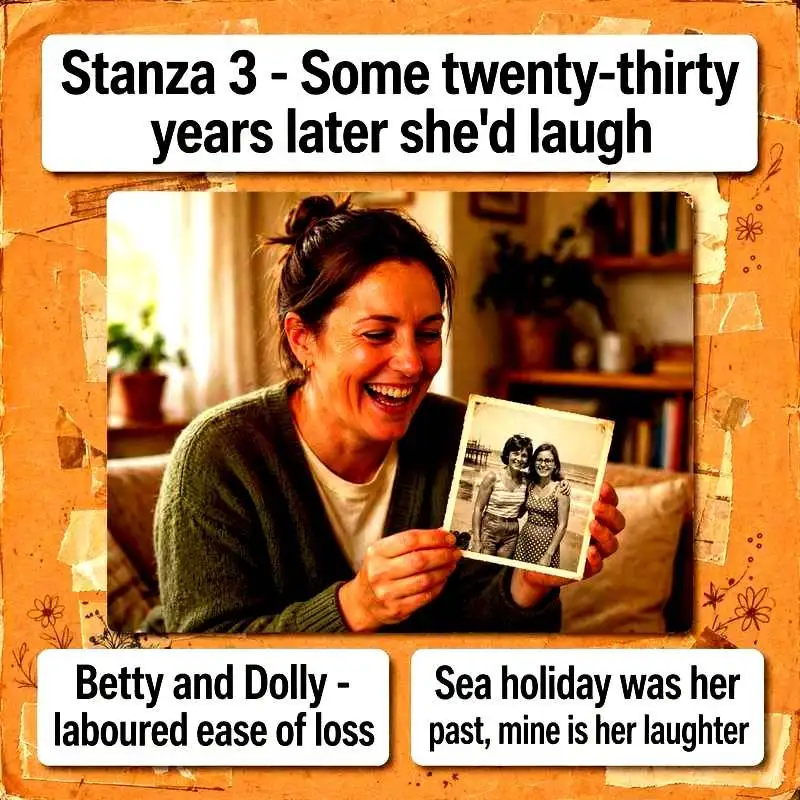
- The poet says that after twenty-thirty years, her mother would look at the same photograph and laugh. She would point to her cousins Betty and Dolly and say how their parents had dressed them up strangely for the beach. For the mother, the sea holiday was her past. But now for the poet, her mother’s laughter is the past, because her mother is dead. Both of them – the mother remembering her childhood, and the daughter remembering her mother’s laughter – are trying to deal with loss. They both try to laugh, but their laughter is full of pain and the difficulty of accepting the loss.
- कवयित्री कहती है कि बीस-तीस साल बाद, उसकी माँ उसी तस्वीर को देखकर हँसा करती थी। वह अपनी चचेरी बहनों बेटी और डॉली की ओर इशारा करके कहती थी कि कैसे उनके माता-पिता ने उन्हें समुद्र तट के लिए अजीब कपड़ों में तैयार किया था। माँ के लिए, वह समुद्र की छुट्टी उसका अतीत थी। लेकिन अब कवयित्री के लिए, उसकी माँ की हँसी ही अतीत बन गई है, क्योंकि उसकी माँ की मृत्यु हो चुकी है। दोनों ही – माँ अपने बचपन को याद करके, और बेटी अपनी माँ की हँसी को याद करके – क्षति को सहने की कोशिश कर रही हैं। वे दोनों हँसने की कोशिश करती हैं, लेकिन उनकी हँसी में दर्द और नुकसान को स्वीकार करने की कठिनाई भरी हुई है।
A Photograph Explanation – Stanza 4
Now she has been dead nearly as many years
As that girl lived. And of this circumstance
There is nothing to say at all.
Its silence silences.
1. Important word
| Word | Meaning in English | हिंदी में अर्थ |
| Circumstance | Situation or condition | परिस्थिति |
| Nothing to say at all | No words to express deep sorrow | गहरे दुःख को व्यक्त करने के लिए कोई शब्द नहीं |
| Silence silences | Death’s silence makes everyone speechless | मृत्यु की खामोशी सबको खामोश कर देती है |
2. Hindi Translation
- “Now she’s been dead nearly as many years”
- अब कवयित्री की माँ को मरे हुए लगभग उतने ही वर्ष हो गए हैं, जितने वर्ष वह लड़की (उनकी माँ का बचपन का रूप) जीवित रही थी।
- “As that girl lived.”
- जिस छोटी लड़की की तस्वीर में दिखाई गई है, वह जितने वर्षों तक जीवित रही थी, लगभग उतने ही वर्ष अब उसकी मृत्यु को हो चुके हैं।
- “And of this circumstance”
- इस परिस्थिति के बारे में—
- “There is nothing to say at all.”
- कवयित्री के पास कहने के लिए कुछ भी नहीं है।
- “Its silence silences.”
- इस मृत्यु और दुख की गहराई इतनी अधिक है कि यह मौन कवयित्री को भी मौन कर देता है।
3 .Reference:
These are the concluding lines of the poem ‘A Photograph’ by Shirley Toulson.
4. Context:
- In this stanza, the poet talks about her mother’s death and how she feels about it now. The happy memory of the photograph is contrasted with the painful reality of her mother’s absence.
- इस पद्य में कवयित्री अपनी माँ की मृत्यु के बारे में और अब वह कैसा महसूस करती है, इस बारे में बात करती है। तस्वीर की खुशनुमा याद की तुलना उसकी माँ की अनुपस्थिति की दर्दनाक वास्तविकता से की गई है।
5. Explanation
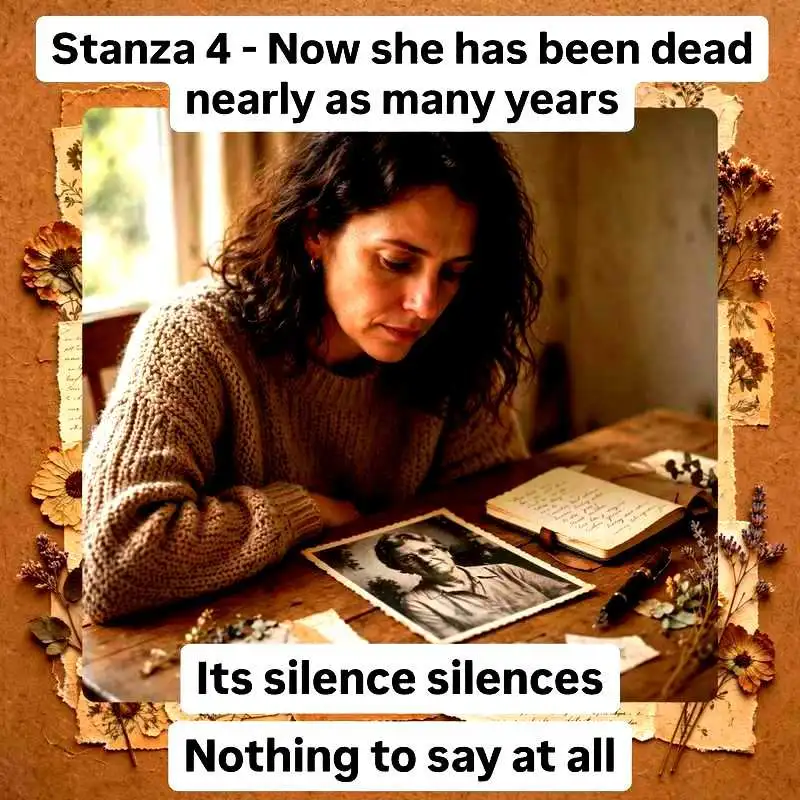
- The poet says that her mother died about twelve years ago. At that time, her mother had lived for many years after the photograph was taken. Now, her mother has been dead for almost as many years as she lived as a twelve-year-old girl in the photo. The poet is full of grief. This situation is so painful that she has no words to explain it. The silence of her mother’s death has silenced the poet as well. The poet is left speechless with sorrow.
- कवयित्री कहती है कि उसकी माँ की मृत्यु लगभग बारह साल पहले हुई थी। उस समय, तस्वीर खींचे जाने के बाद उसकी माँ कई सालों तक जीवित रही थी। अब, उसकी माँ को मरे हुए लगभग उतने ही साल हो गए हैं जितने साल वह तस्वीर में बारह साल की लड़की के रूप में जीवित रही थी। कवयित्री दुःख से भरी हुई है। यह परिस्थिति इतनी दर्दनाक है कि इसे समझाने के लिए उसके पास कोई शब्द नहीं है। उसकी माँ की मृत्यु की खामोशी ने कवयित्री को भी खामोश कर दिया है। वह दुःख के कारण निःशब्द रह गई है।
A Photograph Class 11 Questions and Answers
Think it out
- What does the word ‘cardboard’ denote in the poem? Why has this word been used?
Answer:
The word ‘cardboard’ refers to the thick paper on which the old photograph was mounted. The poet uses this word to show that the photograph is old and belongs to the past.
‘Cardboard’ का अर्थ उस मोटे कागज/गत्ते से है जिस पर पुरानी तस्वीर लगी हुई थी। कवयित्री ने इस शब्द का प्रयोग यह बताने के लिए किया है कि तस्वीर पुरानी है और अतीत से संबंधित है। - What has the camera captured?
Answer:
The camera has captured a picture of the poet’s mother as a twelve-year-old girl with her two cousins, Betty and Dolly, at the beach.
कैमरे ने कवयित्री की माँ की लगभग बारह वर्ष की उम्र की तस्वीर खींची है। इसमें वह अपनी दो चचेरी बहनों, Betty और Dolly, के साथ समुद्र तट पर दिखाई दे रही हैं। - What has not changed over the years? Does this suggest something to you?
Answer:
The sea has changed very little over the years. It suggests that nature is permanent and lasting, while human life is temporary and constantly changing.
वर्षों के दौरान समुद्र बहुत कम बदला है। यह संकेत देता है कि प्रकृति स्थायी है, जबकि मनुष्य का जीवन अस्थायी और परिवर्तनशील है। - The poet’s mother laughed at the snapshot. What did this laugh indicate?
Answer:
Her laugh showed that she was happily remembering her childhood and the funny, old-fashioned clothes she and her cousins wore at the beach.
उनकी हँसी से पता चलता है कि वह अपने बचपन की सुखद यादों और समुद्र तट पर पहने गए पुराने ढंग के कपड़ों को याद करके खुश हो रही थीं। - What is the meaning of the line “Both wry with the laboured ease of loss.”?
Answer:
The line means that both the mother’s laughter and the poet’s memories contain a touch of sadness and pain caused by loss. Accepting the loss of a loved one is difficult.
इस पंक्ति का अर्थ है कि माँ की हँसी और कवयित्री की यादों दोनों में वियोग का दुःख और हल्की कड़वाहट है। किसी प्रिय व्यक्ति की मृत्यु को स्वीकार करना बहुत कठिन होता है। - What does “this circumstance” refer to?
Answer:
“This circumstance” refers to the death of the poet’s mother and the fact that she has been dead for almost as many years as she lived as the young girl in the photograph.
“This circumstance” से कवयित्री की माँ की मृत्यु और इस तथ्य का संदर्भ है कि माँ को मरे हुए लगभग उतने ही वर्ष हो गए हैं, जितने वर्ष वह तस्वीर वाली छोटी लड़की के रूप में जीवित रही थीं। - The three stanzas depict three different phases. What are they?
Answer:
The three stanzas show three different phases: First stanza: The poet’s mother’s childhood. Second stanza: The mother’s adulthood and her memories of childhood. Third stanza: The poet’s present grief after her mother’s death.
तीनों पद्यांश जीवन के तीन अलग-अलग चरणों को दर्शाते हैं: पहला पद्यांश: कवयित्री की माँ का बचपन। दूसरा पद्यांश: माँ का वयस्क जीवन और बचपन की यादें। तीसरा पद्यांश: माँ की मृत्यु के बाद कवयित्री का वर्तमान दुःख और मौन।
A Photograph Class 11 Important Questions Answers
- What does the photograph tell the poet about her mother’s childhood?
Answer:
The photograph shows that the poet’s mother had a happy childhood. At about twelve years of age, she went to the beach with her cousins, Betty and Dolly, and enjoyed playing in the sea.
तस्वीर से पता चलता है कि कवयित्री का बचपन खुशहाल था। लगभग बारह वर्ष की उम्र में वह अपनी चचेरी बहनों Betty और Dolly के साथ समुद्र तट पर गई और समुद्र में खेलते हुए आनंद लिया। - Why does the poet say that the sea has changed less?
Answer:
The poet says this because the sea has remained almost the same over the years, while human beings grow old and eventually die. It shows the temporary nature of human life.
कवयित्री ऐसा इसलिए कहती है क्योंकि वर्षों बाद भी समुद्र लगभग वैसा ही है, जबकि मनुष्य बूढ़ा हो जाता है और अंततः उसकी मृत्यु हो जाती है। यह मानव जीवन की अस्थायी प्रकृति को दर्शाता है। - What does the line “The sea holiday was her past, mine is her laughter” mean?
Answer:
The sea holiday was a memory from the mother’s past. After her death, the mother’s laughter while looking at the photograph became a memory from the poet’s past.
समुद्र तट की छुट्टी माँ के अतीत की याद थी। माँ की मृत्यु के बाद तस्वीर देखकर उनकी हँसी कवयित्री के लिए अतीत की एक याद बन गई। - Explain the significance of the phrase “terribly transient feet.”
Answer:
“Terribly transient feet” refers to the feet of the three girls, whose childhood was temporary and short-lived. It contrasts human life with the lasting nature of the sea.
“Terribly transient feet” तीनों लड़कियों के पैरों को दर्शाता है, जिनका बचपन क्षणभंगुर और अल्पकालिक था। यह मनुष्य के अस्थायी जीवन और समुद्र की स्थायी प्रकृति के बीच अंतर दिखाता है। - Why does the poet feel sad while looking at the photograph?
Answer:
The poet feels sad because the photograph reminds her of her mother’s childhood and her mother’s death. She realizes that the happy moments shown in the photograph can never return.
कवयित्री तस्वीर देखकर दुखी होती है क्योंकि उसे अपनी माँ का बचपन और उनकी मृत्यु याद आती है। वह समझती है कि तस्वीर में दिखाई देने वाले खुशहाल पल फिर कभी वापस नहीं आ सकते। - How does the photograph become a link between the past and the present?
Answer:
The photograph connects the poet’s mother’s childhood in the past with the poet’s present memories. It allows the poet to remember her mother even after her death.
तस्वीर कवयित्री की माँ के अतीत के बचपन को कवयित्री की वर्तमान यादों से जोड़ती है। माँ की मृत्यु के बाद भी यह तस्वीर उन्हें अपनी माँ को याद करने में मदद करती है। - Why does the poet say, “Its silence silences”?
Answer:
The poet says this because her mother’s death has left her speechless with grief. The pain of the loss is so deep that she cannot express it in words.
कवयित्री ऐसा इसलिए कहती है क्योंकि उसकी माँ की मृत्यु ने उसे दुःख से निःशब्द कर दिया है। वियोग का दुःख इतना गहरा है कि वह उसे शब्दों में व्यक्त नहीं कर सकती।