
The Voice of the Rain Class 11
The Voice of the Rain Class 11 English Hornbill की एक महत्वपूर्ण कविता है, जिसे Hindi-medium students के लिए समझना आसान बनाने के लिए इस पोस्ट में सरल भाषा में समझाया गया है। यहाँ Walt Whitman की इस कविता का Hindi & English explanation, Reference, Context, stanza-wise Hindi translation, important word meanings तथा Important Questions & Answers दिए गए हैं। साथ ही, कविता में वर्णित water cycle और इसके मुख्य विचारों को भी आसान तरीके से समझाया गया है, ताकि विद्यार्थी परीक्षा की बेहतर तैयारी कर सकें।
The Voice of the Rain Explanation in Hindi & English
FIRST STANZA
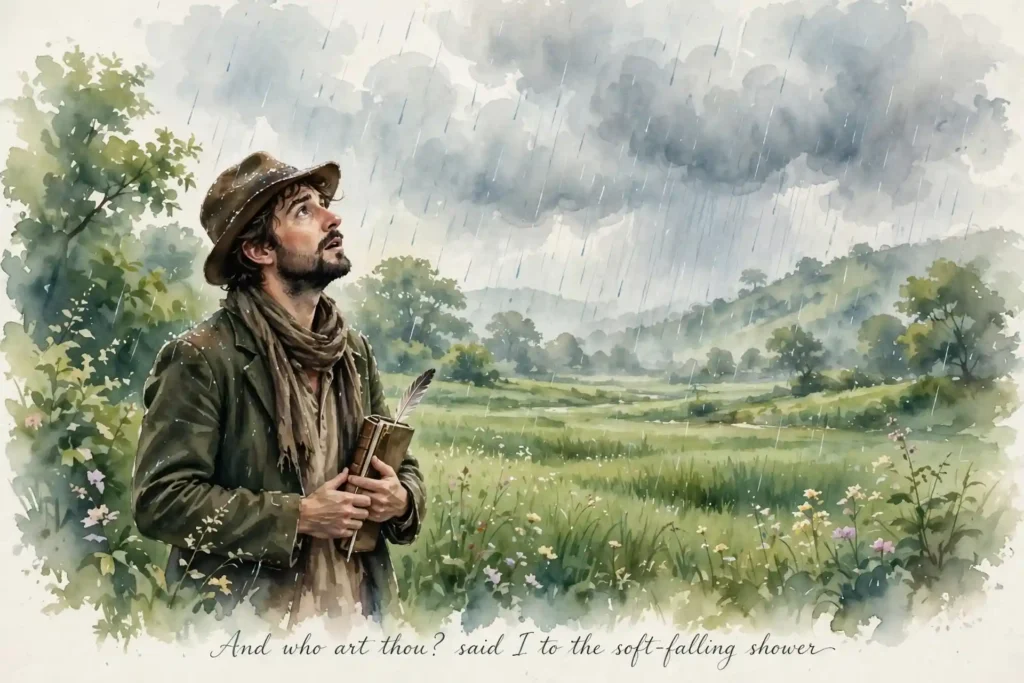
And who art thou? said I to the soft-falling shower,
Which, strange to tell, gave me an answer, as here translated:
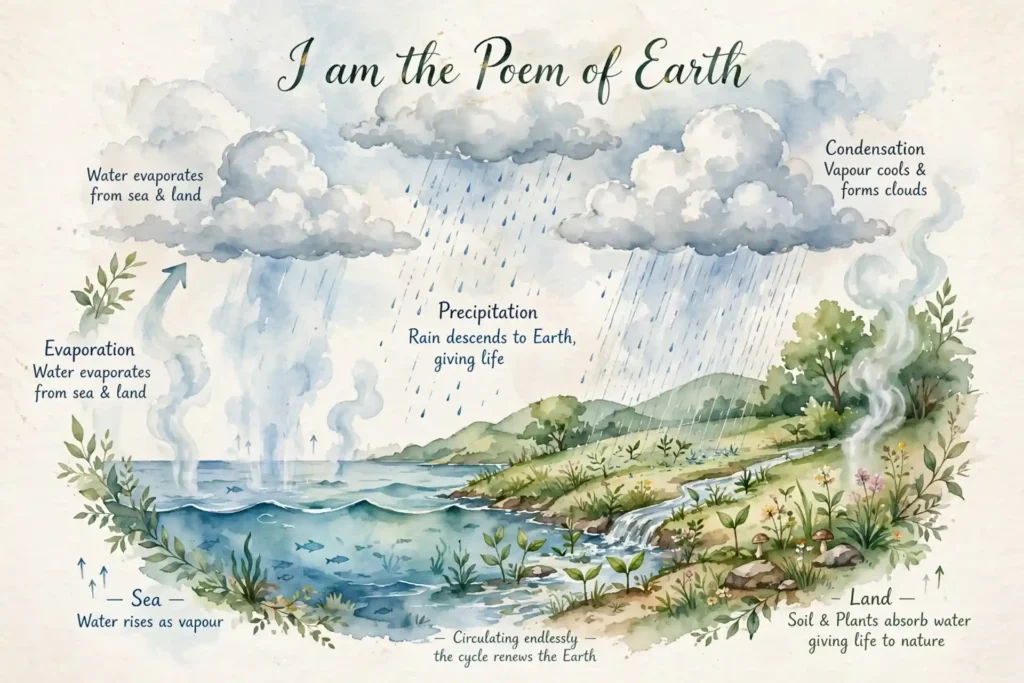
I am the Poem of Earth, said the voice of the rain,
Eternal I rise impalpable out of the land and the bottomless sea,
Upward to heaven, whence, vaguely form’d, altogether changed,
and yet the same,
1.IMPORTANT WORD MEANINGS
| Words | English Meaning | Hindi Meaning |
| Art thou | Are you | तुम कौन हो |
| Soft-falling shower | Gentle rain | कोमलता से गिरती हुई बौछार |
| Strange to tell | Very unusual to say | बताने में अजीब बात है |
| Poem of Earth | Song of Earth | धरती की कविता |
| Eternal | Never ending | शाश्वत, अनन्त |
| Impalpable | Cannot be touched | जिसे छुआ न जा सके |
| Bottomless sea | Very deep sea | अथाह समुद्र |
| Whence | From where | जहाँ से |
| Vaguely form’d | Unclear shape | अस्पष्ट रूप से बना हुआ |
2. REFERENCE
These lines have been taken from the poem “The Voice of the Rain” written by Walt Whitman. It is taken from his famous collection ‘Leaves of Grass’ and is included in NCERT Hornbill Book, Chapter 3 for Class 11.
3. CONTEXT
In these lines, the poet is talking to the rain. He asks who it is, and the rain surprisingly answers him and tells him about its eternal journey.
इन पंक्तियों में कवि वर्षा से बात कर रहा है। वह उससे पूछता है कि वह कौन है, और आश्चर्यजनक रूप से वर्षा उसे जवाब देती है और अपनी अनन्त यात्रा के बारे में बताती है।
4. EXPLANATION
The poet asks the soft-falling rain who it is. Strangely, the rain gives an answer. The rain calls itself the “Poem of Earth” because like a poem, it brings beauty and joy to the earth. It says that it rises eternally in an invisible form from the land and the bottomless sea and goes up to the sky. There it changes into clouds – its form changes completely but it remains water at heart.
कवि कोमलता से गिरती हुई वर्षा से पूछता है कि तुम कौन हो। अजीब बात है कि वर्षा उसे जवाब देती है। वर्षा खुद को “धरती की कविता” कहती है क्योंकि कविता की तरह वह भी धरती पर सुंदरता और खुशी लाती है। वह कहती है कि वह हमेशा के लिए अदृश्य रूप में जमीन और अथाह समुद्र से उठती है और आकाश में चली जाती है। वहाँ वह बादलों में बदल जाती है – उसका रूप पूरी तरह बदल जाता है लेकिन वह दिल से पानी ही रहती है।
SECOND STANZA
I descend to lave the droughts, atomies, dust-layers of the globe,
And all that in them without me were seeds only, latent, unborn;
And forever, by day and night, I give back life to my own origin,
And make pure and beautify it;
1. IMPORTANT WORD MEANINGS
| Words | English Meaning | Hindi Meaning |
| Descend | Come down | नीचे उतरना |
| Lave | Wash, bathe | धोना, नहलाना |
| Droughts | Lack of rain / dryness | सूखा |
| Atomies | Very small particles | छोटे-छोटे कण |
| Dust-layers | Layers of dust | धूल की परतें |
| Globe | Earth | पृथ्वी, संसार |
| Latent | Hidden, dormant | छिपा हुआ, सुप्त |
| Unborn | Not yet born / not grown | अजन्मा, जो अभी उगा नहीं |
| Origin | Source from where it started | उद्गम, जहाँ से शुरू हुआ |
| Beautify | Make beautiful | सुंदर बनाना |
2. Refrence
These lines have been taken from the poem “The Voice of the Rain” written by Walt Whitman. It is taken from his famous collection ‘Leaves of Grass’ and is included in NCERT Hornbill Book, Chapter 3 for Class 11.
3. Context
In these lines, the rain continues its answer and tells what it does after it rises to the sky. It explains its purpose of coming back to earth.
इन पंक्तियों में वर्षा अपना उत्तर जारी रखती है और बताती है कि वह आकाश में जाने के बाद क्या करती है। वह धरती पर वापस आने का अपना उद्देश्य बताती है।
4. Explanation
English Explanation: The rain says that after becoming clouds, it comes down to wash away the droughts, dust and tiny particles of the earth. It says that without rain, seeds remain hidden inside the earth, latent and unborn – they cannot grow. The rain gives life to those seeds. And forever, day and night, it gives back life to its own origin – the land and sea from where it rose. In this way, it purifies and beautifies its own source. This shows the cyclic nature of rain.
वर्षा कहती है कि बादल बनने के बाद वह नीचे आती है और पृथ्वी के सूखे, धूल और छोटे-छोटे कणों को धो देती है। वह कहती है कि उसके बिना बीज धरती के अंदर ही छिपे रहते हैं, सुप्त और अजन्मे – वे उग नहीं सकते। वर्षा उन बीजों को जीवन देती है। और हमेशा, दिन-रात, वह अपने ही उद्गम – जमीन और समुद्र, जहाँ से वह उठी थी – को जीवन वापस देती है। इस तरह, वह अपने ही स्रोत को शुद्ध और सुंदर बनाती है। यह वर्षा की चक्रीय प्रकृति को दर्शाता है।
THIRD STANZA (Conclusion Part)
(For song, issuing from its birth-place, after fulfilment, wandering
Reck’d or unreck’d, duly with love returns.)
1. IMPORTANT WORD MEANINGS
| Words | English Meaning | Hindi Meaning |
| For song | Like a song | गीत की तरह |
| Issuing | Coming out, originating | निकलना, उत्पन्न होना |
| Birth-place | Place of origin | जन्म स्थान |
| Fulfilment | Completion of work / purpose | उद्देश्य की पूर्ति |
| Wandering | Moving around / travelling | भटकना, घूमना |
| Reck’d or unreck’d | Cared for or not cared for (old English) | परवाह की गई हो या न की गई हो |
| Duly | Properly, at the right time | विधिवत, उचित समय पर |
| Returns | Comes back | वापस आना |
2. Reference
These lines have been taken from the poem “The Voice of the Rain” written by Walt Whitman. It is taken from his famous collection ‘Leaves of Grass’ and is included in NCERT Hornbill Book, Chapter 3 for Class 11.
3. Context
These are the final lines where the poet himself compares the rain to a song. He explains the similarity between the cycle of rain and the journey of a song/poem.
ये अंतिम पंक्तियाँ हैं जहाँ कवि स्वयं वर्षा की तुलना एक गीत से करता है। वह वर्षा के चक्र और एक गीत/कविता की यात्रा के बीच समानता को समझाता है।
4. Explanation
In the end, the poet makes a beautiful comparison. He says that just like the rain, a song or poem also originates from its birthplace (the poet’s heart), wanders around after fulfilling its purpose – whether anyone cares for it or not – and finally returns to its creator with love. Just like rain gives life to earth and returns to its origin (sea and land), a song after giving joy to people returns to the poet’s heart, completing its cycle. This is why rain calls itself the “Poem of Earth”.
अंत में कवि एक सुंदर तुलना करता है। वह कहता है कि वर्षा की तरह ही एक गीत या कविता भी अपने जन्म स्थान (कवि के हृदय) से निकलती है, अपना उद्देश्य पूरा करने के बाद इधर-उधर भटकती है – चाहे कोई उसकी परवाह करे या न करे – और अंत में प्रेम के साथ अपने रचयिता के पास वापस लौट आती है। जैसे वर्षा धरती को जीवन देकर अपने उद्गम (समुद्र और जमीन) पर लौट जाती है, वैसे ही एक गीत लोगों को आनंद देकर कवि के हृदय में वापस लौट आता है, अपना चक्र पूरा करता है। इसीलिए वर्षा खुद को “धरती की कविता” कहती है।
The Voice of the Rain Questions and Answers
Think it out
Q. 1. There are two voices in the poem. Who do they belong to? Which lines indicate this?
इस कविता में दो आवाजें हैं। वे किसकी हैं? कौन सी पंक्तियाँ यह दर्शाती हैं?
Ans. The two voices belong to the poet and the rain. Poet’s line: “And who art thou? said I to the soft-falling shower,” Rain’s line: “I am the Poem of Earth, said the voice of the rain,”
दो आवाजें कवि और वर्षा की हैं। कवि की पंक्ति: “तुम कौन हो? मैंने कहा” और वर्षा की पंक्ति: “मैं धरती की कविता हूँ।”
Q. 2. What does the phrase “strange to tell” mean?
“strange to tell” वाक्यांश का क्या अर्थ है?
Ans. It means it is very strange that the rain answered the poet because normally rain cannot speak.
इसका अर्थ है कि यह बताना बहुत अजीब है कि वर्षा ने कवि को उत्तर दिया क्योंकि सामान्य रूप से वर्षा बोल नहीं सकती।
Q. 3. There is a parallel drawn between rain and music. Which words indicate this? Explain the similarity between the two.
वर्षा और संगीत के बीच समानता दिखाई गई है। कौन से शब्द यह दर्शाते हैं? दोनों के बीच समानता समझाइए।
Ans. The words “Poem of Earth” and “song” indicate this. Both originate from a birthplace, wander fulfilling their purpose of giving life and joy, and finally return to their origin with love.
शब्द “धरती की कविता” और “गीत” यह दर्शाते हैं। दोनों अपने जन्म स्थान से निकलते हैं, अपना उद्देश्य पूरा करते हैं और अंत में प्यार के साथ अपने उद्गम पर लौट आते हैं।
Q. 4. How is the cyclic movement of rain brought out in the poem? Compare it with what you have learnt in science.
कविता में वर्षा की चक्रीय गति कैसे दिखाई गई है? इसकी तुलना विज्ञान में आपने जो सीखा है उससे कीजिए।
Ans. Rain rises impalpable from land and sea to heaven as vapour, then descends to give life to its own origin. This is the water cycle – evaporation, condensation and precipitation.
वर्षा अदृश्य रूप में जमीन और समुद्र से उठकर आकाश में जाती है, फिर नीचे आकर अपने ही उद्गम को जीवन देती है। यह वही जल-चक्र है – वाष्पीकरण, संघनन और वर्षा।
Q. 5. Why are the last two lines put within brackets?
अंतिम दो पंक्तियों को कोष्ठक में क्यों रखा गया है?
Ans. The last two lines are put within brackets because they are not spoken by the rain but are the poet’s own reflection comparing rain to a song.
अंतिम दो पंक्तियों को कोष्ठक में इसलिए रखा गया है क्योंकि वे वर्षा ने नहीं बोलीं, बल्कि वे कवि के अपने विचार हैं जो वर्षा की तुलना गीत से कर रहे हैं।
Q. 6. List the pairs of opposites found in the poem.
कविता में पाए गए विलोम शब्दों के जोड़े सूचीबद्ध कीजिए।
Ans. The pairs are Day and Night, Rise and Descend, Reck’d and Unreck’d.
जोड़े हैं – दिन और रात, उठना और नीचे उतरना, परवाह की गई और परवाह न की गई।
II. Notice the following sentence patterns. Rewrite the above sentences in prose.
निम्नलिखित वाक्य संरचनाओं पर ध्यान दें। उपर्युक्त वाक्यों को गद्य में लिखें।
- And who art thou? said I to the soft-falling shower.
और तुम कौन हो? मैंने कोमल बौछार से कहा।
Ans. I said to the soft-falling shower, “Who are you?”
मैंने धीरे गिरती बौछार से कहा, “तुम कौन हो?” - I am the Poem of Earth, said the voice of the rain.
मैं धरती की कविता हूँ, वर्षा की आवाज ने कहा।
Ans. The voice of the rain said, “I am the Poem of Earth.”
वर्षा की आवाज ने कहा, “मैं धरती की कविता हूँ।” - Eternal I rise
मैं शाश्वत ऊपर उठती हूँ
Ans. I rise eternally.
मैं हमेशा के लिए ऊपर उठती हूँ। - For song … duly with love returns
गीत के लिए … प्यार के साथ विधिवत वापस लौटता है
Ans. For a song, issuing from its birth-place, after fulfilment, wandering, whether cared for or not, returns duly with love to its birthplace.
एक गीत के लिए, अपने जन्म स्थान से निकलने के बाद, अपना उद्देश्य पूरा करके, भटकने के बाद, चाहे उसकी परवाह की जाए या नहीं, प्यार के साथ विधिवत अपने जन्म स्थान पर लौट आता है।
III. Look for some more poems on the rain and see how this one is different from them.
वर्षा पर कुछ और कविताएँ देखिए और देखिए कि यह कविता उनसे कैसे अलग है।
Ans. Other rain poems like “Rain on the Roof” describe the sound and memories of rain. This poem is different because it gives rain its own voice to explain the water cycle scientifically and compares rain to a poem/song philosophically.
वर्षा पर अन्य कविताएँ जैसे “Rain on the Roof” वर्षा की आवाज और यादों का वर्णन करती हैं। यह कविता अलग है क्योंकि इसमें वर्षा को अपनी आवाज दी गई है जो वैज्ञानिक रूप से जल-चक्र समझाती है और दार्शनिक रूप से वर्षा की तुलना कविता/गीत से करती है।
The Voice of the Rain Important Questions
The Voice of Rain Short answer type questions
Q. 1. Who is the poet of “The Voice of the Rain”?
“The Voice of the Rain” कविता के कवि कौन हैं?
Ans. The poet is Walt Whitman.
कवि Walt Whitman हैं।
Q. 2. What is the rain called in the poem?
कविता में वर्षा को क्या कहा गया है?
Ans. The rain is called the “Poem of Earth”.
वर्षा को “धरती की कविता” कहा गया है।
Q. 3. Where does the rain rise from?
वर्षा कहाँ से उठती है?
Ans. The rain rises from the land and the bottomless sea.
वर्षा जमीन और अथाह समुद्र से उठती है।
Q. 4. How does the poet compare rain with a song?
कवि ने वर्षा की तुलना गीत से कैसे की है?
Ans. Like a song originates from the heart and returns after giving joy, rain originates from earth and returns after giving life.
जैसे एक गीत दिल से निकलता है और खुशी देकर वापस लौटता है, वैसे ही वर्षा धरती से निकलती है और जीवन देकर वापस लौट आती है।
Q. 5. What does the rain do for the earth?
वर्षा धरती के लिए क्या करती है?
Ans. The rain purifies the earth, gives life to seeds and makes it beautiful.
वर्षा धरती को शुद्ध करती है, बीजों को जीवन देती है और इसे सुंदर बनाती है।
Q. 6. What is the central idea of the poem?
कविता का मुख्य विचार क्या है?
Ans. The central idea is that rain is the cycle of life which gives life and returns to its origin, just like a song.
मुख्य विचार यह है कि वर्षा जीवन का एक चक्र है जो जीवन देती है और अपने उद्गम पर लौट आती है, बिल्कुल एक गीत की तरह।
The Voice of Rain Long Answer Type Questions (60 words)
Q. 1. Describe the cycle of rain as told by the rain itself?
वर्षा ने स्वयं अपने चक्र का वर्णन कैसे किया है?
Ans. The rain says it is the Poem of Earth. It rises eternally and impalpably from the land and bottomless sea to the heaven as vapour. It changes into clouds, wanders and then descends to its own origin. It purifies the earth, gives life to dry seeds and makes the earth beautiful.
वर्षा कहती है कि वह धरती की कविता है। वह शाश्वत रूप से जमीन और अथाह समुद्र से अदृश्य रूप में वाष्प बनकर आकाश में उठती है। वह बादल बनती है, भटकती है और फिर अपने ही उद्गम पर बरसती है। वह धरती को शुद्ध करती है, सूखे बीजों को जीवन देती है और धरती को सुंदर बनाती है।
Q. 2. How does the poet draw a similarity between rain and a song?
कवि वर्षा और गीत के बीच समानता कैसे दर्शाता है?
Ans. The poet says a song is born from a poet’s heart, travels, fulfils itself by giving joy to all, whether cared or not, and finally returns to the poet with love. Similarly, rain is born from earth and sea, travels as clouds, gives life and purity to earth, and returns to its origin with love. Both give joy and life.
कवि कहता है कि एक गीत कवि के हृदय से जन्म लेता है, यात्रा करता है, सभी को खुशी देकर खुद को पूरा करता है, चाहे परवाह हो या न हो, और अंत में प्यार के साथ कवि के पास लौटता है। इसी तरह वर्षा धरती और समुद्र से जन्म लेती है, बादलों के रूप में यात्रा करती है, धरती को जीवन देती है और प्यार के साथ अपने उद्गम पर लौटती है। दोनों खुशी और जीवन देते हैं।
Q. 3. What is the theme or message of the poem “The Voice of the Rain”?
“The Voice of the Rain” कविता का विषय या संदेश क्या है?
Ans. The theme is the eternal cycle of nature and the commonality between nature and human art. The rain gives life to earth and returns to its source, just as a song gives happiness and returns to the poet. The poem teaches that nothing is wasted in nature and every return is full of love and fulfilment.
विषय प्रकृति का शाश्वत चक्र और प्रकृति व मानव कला के बीच समानता है। वर्षा धरती को जीवन देकर अपने स्रोत पर लौटती है, जैसे गीत खुशी देकर कवि के पास लौटता है। कविता सिखाती है कि प्रकृति में कुछ भी व्यर्थ नहीं जाता और हर वापसी प्यार और परिपूर्णता से भरी होती है।
The Voice of the Rain Free PDF
The Voice of the Rain के Complete Explanation, Hindi & English Notes और Important Question Answers की PDF प्राप्त करने के लिए info@niyans.com पर ईमेल करें।
Related Posts
अगर आप Class 11 English Hornbill की अन्य कविताओं और chapters की तैयारी कर रहे हैं, तो ये posts भी आपके लिए उपयोगी हो सकते हैं:
A Photograph – Explanation, Hindi Translation & Important Questions
The Laburnum Top – Complete Explanation & Important Questions
Discovering Tut: The Saga Continues – Explanation & Important Q&A
The Portrait of a Lady – Explanation, Summary & Important Questions
We’re Not Afraid to Die… If We Can All Be Together – Explanation & Important Q&A